
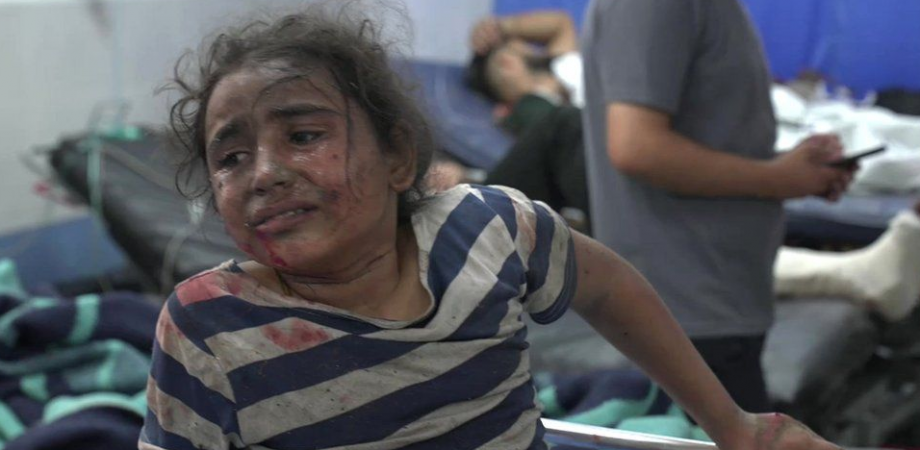
In a Gaza hospital, time has narrowed to the rhythm of a machine delivering oxygen to a ten-year-old girl whose survival depends on it. Lana Zaarab lies motionless, her breathing assisted around the clock, as doctors monitor a body weakened by a rare genetic condition that has reached its most dangerous stage. For her family, each day is not counted by calendars, but by whether her oxygen levels remain stable.
Lana suffers from advanced Fanconi–Bickel syndrome, an inherited disorder that disrupts how the body stores and uses glucose. The consequences are devastating: profound bone weakness, an enlarged liver and spleen, repeated respiratory infections, persistent fever and a complete loss of mobility. Her immune system is so compromised that even minor infections pose a serious threat. Medical specialists say that without continuous support, her condition would rapidly become fatal.
There is no definitive cure for the disease, but early and specialised care can significantly slow its progression and reduce the risk of lethal complications. Such care, however, does not exist in Gaza. Hospitals are operating without the specialised units, coordinated medical teams or essential medicines required to manage rare and complex conditions. As a result, Lana’s survival now depends on obtaining permission to leave the Strip for treatment elsewhere, a process marked by long delays and uncertainty amid an ongoing genocidal war.
Her case is not isolated. Hundreds of children in Gaza are waiting for urgent medical referrals abroad, many of them with conditions that local hospitals cannot treat. International health bodies warn that thousands of young patients remain stuck on waiting lists while shortages of equipment, medication and expertise deepen. For families like Lana’s, a referral is not an administrative procedure but the only remaining chance to keep a child alive.
Lana’s struggle exposes the human cost of a health system pushed beyond its limits. It shows how illness, restricted movement and collapsing medical infrastructure converge, leaving a child suspended between life-saving care and closed borders. Her story is a reminder that, in Gaza, access to healthcare can determine whether a child lives or dies.
Source : Safa News


