
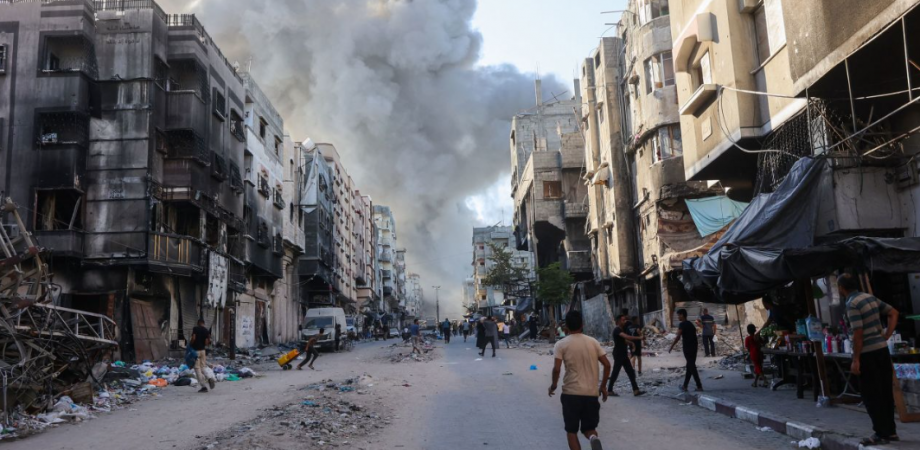
The Gaza Strip awoke on Wednesday to another wave of violence as explosions and sustained fire echoed across its southern and central districts, underscoring the fragility of the ceasefire announced months earlier. Along the coast near Rafah, shells struck the shoreline at first light, leaving civilians injured and neighbourhoods on edge. Residents described the morning as a familiar pattern of disruption, where the sounds of the sea were overtaken by detonations from offshore vessels.
Inland, the skies were dominated by low-flying aircraft and drones, particularly over the southern towns east of Khan Younis. Multiple strikes hit built-up areas and open land alike, while helicopter fire raked the outskirts, forcing families to remain indoors. Similar scenes unfolded in central Gaza, where explosions were reported near residential zones east of Deir al-Balah and around the outskirts of Al-Bureij, adding to a sense that no part of the enclave is spared from the reach of the genocidal war.
Further north, armoured vehicles positioned near Gaza City unleashed sustained fire into eastern neighbourhoods, prolonging a night of fear for residents already worn down by months of instability. These incidents form part of a broader pattern since the ceasefire came into force in October 2025, with hundreds of Palestinians killed and well over a thousand reported breaches recorded during what was meant to be a period of calm.
Beyond the immediate violence, the humanitarian situation continues to deteriorate. Restrictions on the entry of aid, shelter materials, and essential equipment have left hospitals overstretched and communities facing acute water shortages. As the ceasefire’s humanitarian provisions remain largely unimplemented, daily life in Gaza is increasingly defined by scarcity, insecurity, and the persistent threat of renewed violence.
Source : Safa News


