
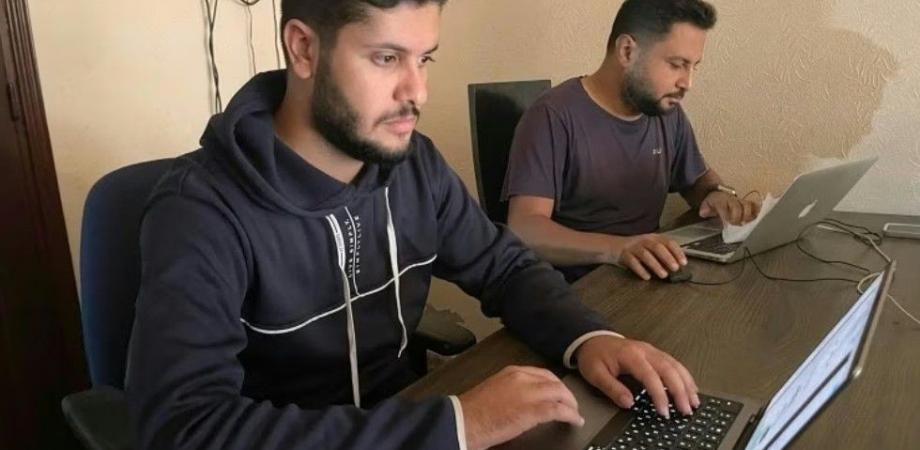
Before the recent genocidal war, remote work had offered thousands of young Gazans a crucial connection to the wider world, providing an alternative income in an economy long restricted by blockade and instability. For many, it was more than a convenience, it was a vital lifeline, allowing graduates and skilled workers to sustain themselves despite limited opportunities at home. Yet the escalation of violence, combined with prolonged electricity cuts and internet disruption, has effectively brought this avenue of work to a standstill, leaving countless freelancers facing financial and emotional hardship.
Young professionals in fields such as graphic design, programming, translation, online education, and e-commerce had relied on digital platforms to reach international clients. The destruction of infrastructure and unreliable connectivity have meant missed deadlines, lost contracts, and evaporating incomes. For Khalil Eid, a graphic designer, the first days of the attacks transformed daily work into an impossible challenge. “Internet outages made it impossible to meet deadlines,” he said. “I tried cafés with access, but it wasn’t enough. Overnight, I lost all my clients and income.” Similarly, Ruaa Ayesh, who provided online lessons to support her family of six, described her work collapsing as international students could no longer participate safely.
Economists warn that the damage to Gaza’s digital sector is emblematic of a broader economic catastrophe. Public spaces and small businesses that had previously supported remote work—offering electricity, internet, and computers, have been destroyed or abandoned due to displacement. Unemployment now exceeds 80%, with large portions of the young workforce losing all sources of income. “The decline of remote work reflects the wider economic collapse,” explained Samir Abu Madlala. “As the economy contracts, demand for digital services disappears, hitting those who had adapted to online work hardest.” The loss of these digital lifelines illustrates the profound and long-term impact of the war on livelihoods, education, and the daily lives of Gaza’s residents.
Source : Safa News


