
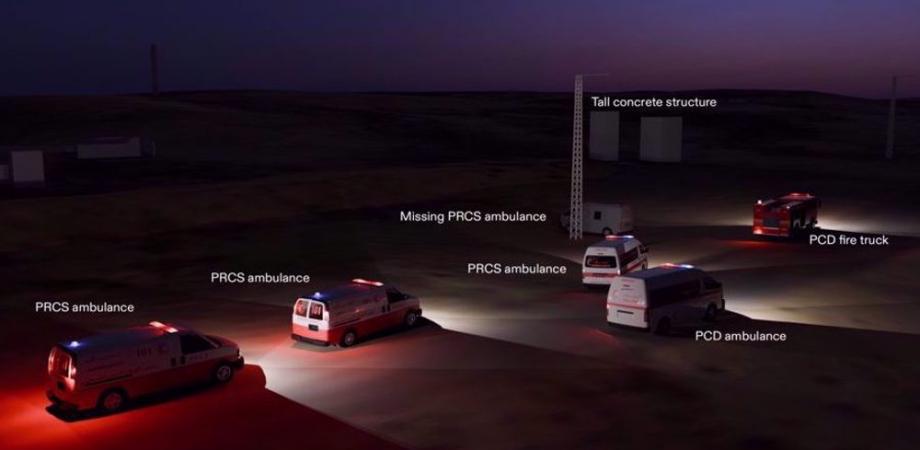
New findings have cast a harsh light on the killing of Palestinian humanitarian workers in Tel al-Sultan, a neighbourhood on the edge of the Gaza Strip, where an episode of a genocidal war unfolded in March 2025. According to a detailed reconstruction released this week, emergency crews responding to distress calls were met with sustained gunfire, leaving fifteen aid workers dead. The incident has come to symbolise the extreme vulnerability of civilians and first responders operating amid an environment where protection is routinely denied.
The analysis, produced by the independent research groups Earshot and Forensic Architecture, draws on audio recordings, satellite imagery and survivor testimony to trace events minute by minute. Their work indicates that hundreds of rounds were discharged in a short span, with shots directed at marked ambulances and uniformed responders. Some victims, the report suggests, were killed from extremely close range after soldiers reached their position, a pattern inconsistent with chaotic crossfire and instead pointing to intentional lethal action.
Among those killed were volunteers from the Palestinian Red Crescent, members of civil defence teams and a worker affiliated with a United Nations relief body. Investigators say that after the shooting stopped, the site was radically altered: vehicles were crushed, personal devices buried and bodies moved, actions that obscured evidence and delayed recovery for days. When the remains were finally located, most were found together in a shallow grave, still wearing identifying clothing that underscored their humanitarian role.
The area around Tel al-Sultan has since been reshaped by new military construction linked to a security corridor and an aid distribution point, developments that residents say have further restricted movement and access to food. For many in Gaza, the killings have become emblematic of a genocidal war in which even those attempting to save lives are treated as expendable. Calls continue to grow for independent accountability mechanisms, as local families insist that remembrance without justice offers little comfort.
Source : Safa News


