
Across much of the world, 1 May is marked by marches, speeches and calls for fair wages. For Palestinian workers, however, the date has taken on a far bleaker meaning. Rather than a moment of collective bargaining or modest gains, it has become a stark reminder of a daily struggle for survival amid a prolonged genocidal war that has reshaped every aspect of economic and social life since late 2023.
Over the past two years, the erosion of livelihoods has reached extraordinary levels. Trade union figures indicate losses approaching $9 billion, while unemployment has surged to nearly two-fifths of the workforce. More than half a million individuals have been pushed out of employment, leaving entire households without stable income. The collapse has not been gradual but abrupt, dismantling fragile economic structures and leaving little room for recovery under continuing pressure.
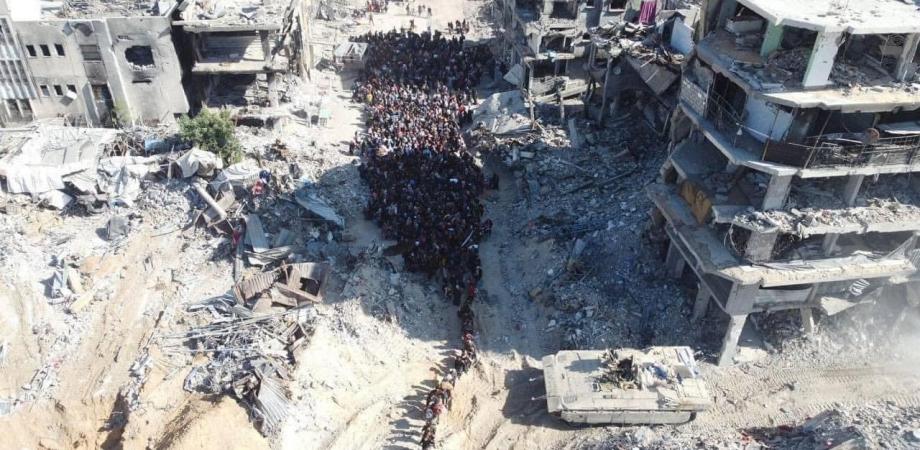
Nowhere is this more evident than in Gaza, where the labour market has effectively ceased to function. Industrial zones lie in ruins, workshops have disappeared, and the foundations of local production have been dismantled. Unemployment has climbed beyond 85 per cent, and daily income losses run into tens of millions of dollars. Former breadwinners, once skilled in trades essential to the local economy, now find themselves displaced and reliant on limited humanitarian relief, as the systematic targeting of infrastructure has stripped the territory of both capacity and expertise.
In the West Bank, conditions reflect a different but equally severe trajectory. Movement restrictions, repeated incursions and territorial fragmentation have disrupted supply chains and paralysed commercial activity. Unemployment continues to rise, while economic contraction has forced many previously stable families into acute hardship. With minimal social protection mechanisms in place, workers face mounting insecurity, their prospects narrowing as the broader economy contracts.
For those who once depended on employment inside Israel, the situation has become increasingly precarious. Work permits—previously a critical lifeline for tens of thousands of families—have largely been suspended, cutting off a major source of income. Attempts to circumvent these restrictions expose workers to detention or worse, turning the pursuit of a livelihood into a high-risk undertaking shaped by political calculations rather than economic necessity.
The human cost of this collapse is reflected not only in statistics but in lives lost. Dozens of workers have been killed in recent years while seeking to earn a living, whether within local labour markets, at sea, or while attempting to reach workplaces. Such incidents underscore the extent to which ordinary economic activity has become entangled with violence, leaving workers to navigate conditions where survival itself is uncertain.
While May Day traces its origins to labour movements in cities such as Chicago in the late nineteenth century, its symbolism here has been transformed. What was once a commemoration of workers’ rights has, under the weight of ongoing devastation, become a subdued and urgent appeal for the most basic of human necessities: safety, dignity and the chance to endure.
Source : Safa News