
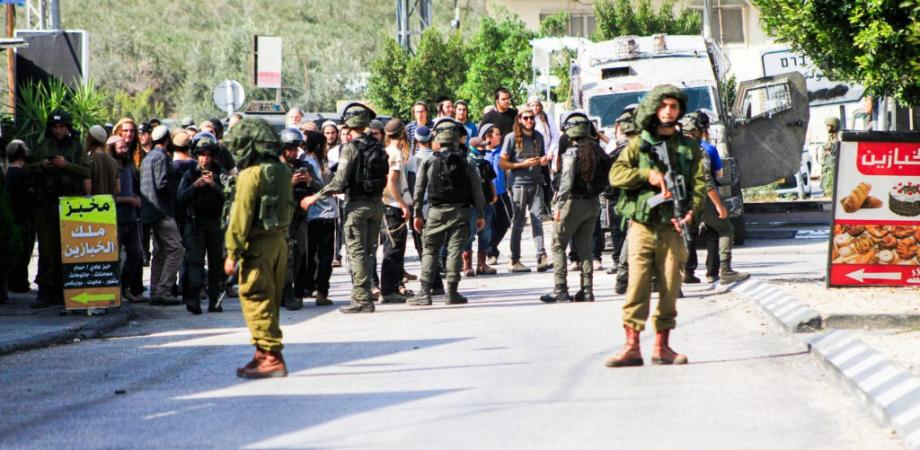
A sharp escalation in settler violence across the West Bank is signalling a shift towards more direct and lethal forms of confrontation. Over recent weeks, incidents have moved beyond property damage to include fatal shootings, with multiple civilians killed and others wounded. Alongside this, arson attacks targeting homes and places of worship have increased, pointing to a pattern of sustained and deliberate pressure on communities already facing acute vulnerability.
Recent attacks indicate a growing level of organisation and coordination. In several areas, including villages near Bethlehem and in the southern Hebron hills, armed groups have carried out operations resembling structured incursions rather than spontaneous acts. Reports of individuals wearing military-style uniforms and using firearms in a systematic manner reinforce concerns that these actions are no longer isolated, but part of a broader and evolving strategy. The nature of these confrontations has led some observers to describe the situation as approaching a form of “street-level warfare”.
This escalation is unfolding within a wider political context marked by increased calls to expand civilian armament. Such developments appear to be lowering barriers to the use of force, contributing to an environment in which armed settlers operate with growing confidence and capacity. The risk, in this setting, is not only the continuation of sporadic attacks, but the possibility of more direct incursions into local communities, where violence could take on an even more immediate and lethal character.
Historical parallels further deepen these concerns. The current trajectory bears resemblance to earlier phases of organised paramilitary activity prior to 1948, when armed groups conducted campaigns that contributed to the displacement of civilian populations. Today’s dynamics suggest a comparable logic: the use of sustained violence to assert control over land, fragment communities, and create conditions that may ultimately compel residents to leave. The limited scale of international response has, in this context, heightened fears that such patterns could intensify without meaningful restraint.
Against this backdrop, emphasis is increasingly placed on the need for collective resilience and coordinated local responses. Strengthening community networks, reinforcing civil resistance, and developing mechanisms of protection are seen as critical in confronting a situation that continues to deteriorate. The trajectory points not towards de-escalation, but towards a prolonged and increasingly volatile phase, where the risks to civilian populations remain both immediate and severe.
Source : Safa News


