
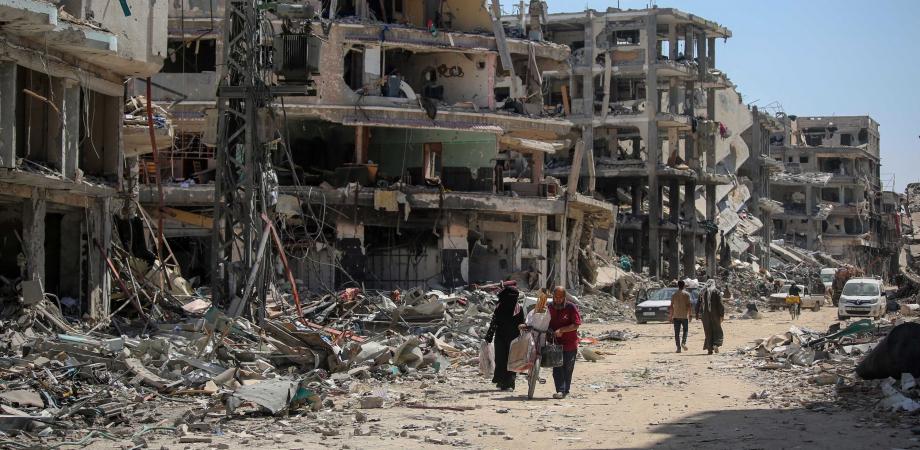
A British-based international relations scholar has raised concerns over whether global attention on Gaza is beginning to fade, despite what he describes as a fragile and incomplete cessation of large-scale violence. Speaking in academic commentary, he suggested that while the pause in mass killing was initially welcomed internationally, it has quickly been accompanied by doubt over whether it represents any meaningful shift towards a lasting political settlement.
He argues that the territory remains in a deeply unstable condition, marked by extensive destruction, fragmented administrative control, and continued restrictions on movement and humanitarian access. In his assessment, the absence of a clear political horizon, combined with ongoing casualties and severe constraints on daily life, points to a situation that remains critically unresolved rather than genuinely stabilised. He further notes that repeated delays in advancing negotiated frameworks have widened the gap between urgent humanitarian needs and the pace of diplomatic engagement.
The academic also highlights the role of domestic political dynamics in shaping the trajectory of events, pointing to growing polarisation and the increasing influence of hardline positions that favour long-term control over parts of Gaza. With electoral pressures intensifying, he suggests that political incentives for compromise are weakening further, while international engagement appears less consistent than in earlier phases. This, he warns, risks normalising a prolonged state of deterioration under the appearance of reduced escalation.
On the ground, he stresses that civilians continue to bear the consequences of this stagnation, with health systems severely weakened and access to essential services still highly constrained. Despite some limited improvements in aid availability, humanitarian organisations continue to report widespread shortages and significant barriers to medical evacuation for patients in urgent need. He concludes that without sustained external pressure and a credible political process, the current situation risks evolving into a long-term cycle of instability and recurring large-scale violence rather than a durable resolution.
Source : Safa News


