
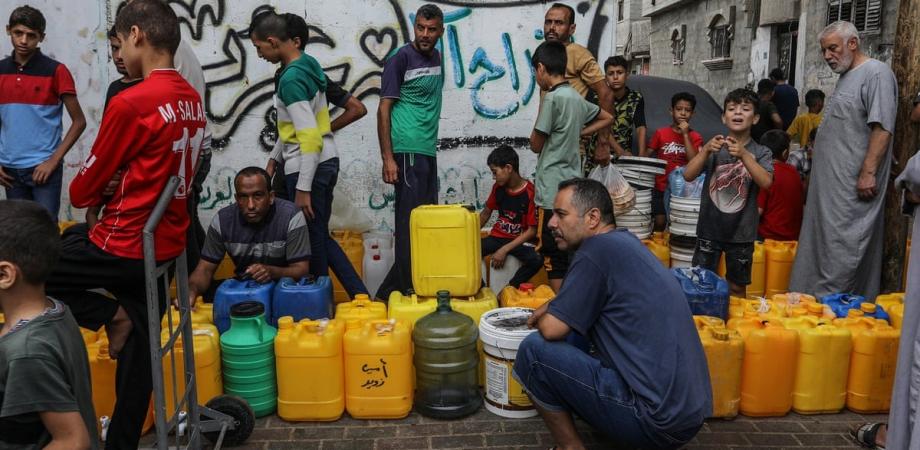
As much of the world marked World Environment Day with calls for sustainability and environmental protection, officials in Gaza warned that the territory is moving towards a catastrophic collapse of its water and sanitation systems under Israel’s ongoing genocidal war and blockade. Local authorities said restrictions on fuel, repair materials, machinery and technical supplies have pushed essential infrastructure to the brink of failure, leaving more than two million Palestinians exposed to worsening health and environmental dangers.
Municipal services across Gaza are struggling to keep desalination plants, water wells and sewage pumping stations operational as fuel reserves rapidly diminish. Engineers and local officials say the territory requires tens of thousands of cubic metres of clean water every day to meet basic domestic and medical needs, particularly during the summer months when temperatures rise sharply. Without spare parts and maintenance equipment, many facilities damaged during the genocidal war can no longer function reliably, increasing fears of widespread water shortages and contamination.
Serious concern has also been raised over sewage accumulation in densely populated neighbourhoods and refugee camps. Authorities in Gaza City warned that the Sheikh Radwan lagoon is receiving vast quantities of untreated wastewater daily after repeated failures at nearby pumping stations. Residents living close to the site face growing risks of disease outbreaks, polluted surroundings and deteriorating living conditions as sewage levels continue to rise. Health officials added that hospitals dependent on desalination systems for dialysis and emergency care may soon face severe disruption if fuel and operational materials are not allowed in.
Local institutions called on the United Nations, donor states and humanitarian organisations to intervene urgently by securing unrestricted access for technical crews and ensuring the immediate delivery of fuel, chlorine, pumps and reconstruction materials. They also appealed for a large-scale rebuilding programme for Gaza’s devastated water, sanitation and energy sectors, warning that continued delays could trigger an environmental and public health disaster with consequences far beyond the territory itself.
Source : Safa News


