
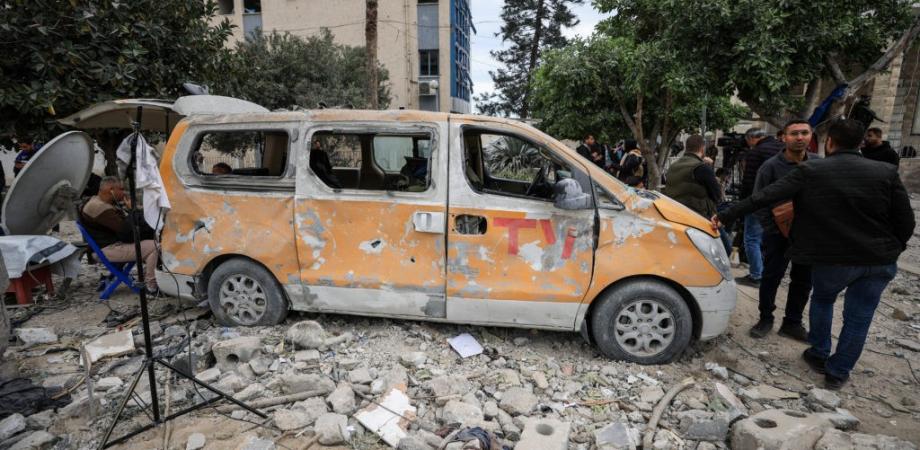
SAFA – Emergency medical services in the Gaza Strip are on the verge of collapse as a result of the ongoing Israeli genocide and blockade, which have devastated infrastructure and caused severe shortages of essential supplies, placing thousands of wounded and critically ill Palestinians at risk.
In the southern city of Khan Younis, displaced resident Abdul Ghani Hussein recalled waiting nearly 45 minutes for an ambulance after suffering a stomach injury and internal bleeding, an ordeal he said felt longer than the pain itself.
His experience reflects a broader pattern of delayed emergency response across the Gaza Strip.
After more than two and a half years of Israeli genocidal war, Gaza's emergency medical system is facing not only an overwhelming number of casualties but also a near collapse in its operational capacity.
Dozens of ambulances and medical transport vehicles have been put out of service because of direct damage, accumulated mechanical failures, and critical shortages of tires, spare parts, engine oil, and batteries.
Israeli restrictions on the entry of maintenance supplies have further hampered repair efforts.
At Nasser Medical Complex, damaged ambulances remain idle in maintenance workshops as technicians struggle to keep a shrinking fleet operational.
Ibrahim Joudeh, who oversees the workshop, described the situation as having reached a "clinical death stage," citing the near-total depletion of essential repair materials.
He said technicians have been forced to dismantle inoperable vehicles to salvage parts for others, adding that approximately 60% of ambulances and medical transport vehicles are now out of service because of cumulative damage.
Additional losses were reported during Israeli ground operations in the vicinity of the hospital.
The crisis extends beyond ambulances. Vehicles used to transport food, medicine, and medical supplies have also been put out of service because of the same shortages.
Hospital administrators have been forced to rent alternative vehicles to maintain basic operations.
On the ground, paramedics continue to face mounting pressure as emergency calls surge.
Hassan Omran said more than 17 ambulances and emergency vehicles have gone out of service over the past month alone, leaving operations functioning at less than 30% of their pre-war capacity.
Omran warned that crews are no longer able to respond to every emergency call from bombardment sites, residential neighborhoods, and displacement shelters, leaving many Palestinians without timely medical assistance. He stressed that even brief delays can mean the difference between life and death.
Reflecting on his experience, Hussein said some patients may die before help arrives and urged international organizations to intervene by providing the urgently needed resources to restore Gaza's emergency medical services.
With a rapidly shrinking fleet, under-resourced maintenance workshops, and overstretched personnel, Gaza's ambulance system is nearing total collapse, where continued delays in securing spare parts and equipment could cost lives.
Source : Safa News


