
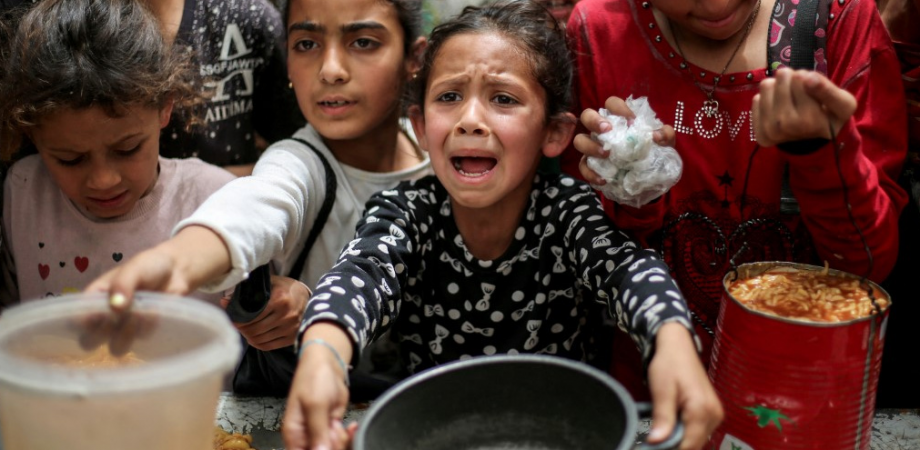
SAFA – The United Nations World Food Programme (WFP) warned on Friday that food insecurity in Gaza will worsen unless additional funding is secured to sustain humanitarian assistance, describing recent improvements as "fragile" despite signs that emergency aid has helped ease hunger.
Speaking at a UN briefing in Geneva, WFP Director of Emergency Preparedness and Response Ross Smith said conditions would deteriorate if humanitarian operations are scaled back.
"The situation will deteriorate," Smith said, noting that the latest Integrated Food Security Phase Classification (IPC) report showed the number of people facing acute food insecurity had fallen to 1.4 million from 1.6 million, reflecting an improvement of about 10%.
"But it's critical that these findings are understood correctly. It's not a story of recovery; it's a story that humanitarian assistance is working," he said. "It does not mean that our job is done, and it does not mean that people in Gaza are no longer at risk."
Smith said more than 200,000 people remain in IPC Phase 4 (Emergency), particularly in areas near the Yellow Line and Orange Line. He warned that funding shortages have become the greatest threat to food security in Gaza, surpassing even humanitarian access constraints.
According to the WFP, the agency requires more than $420 million to sustain operations across Gaza and the occupied West Bank through the end of the year. It has already reduced assistance by cutting cash transfers by 25% and halving food rations for 220,000 households.
Without additional funding, the WFP will be forced to make significant cuts to assistance by October, Smith warned, stressing that preventing a return to famine-like conditions is far less costly than responding after conditions deteriorate.
A new IPC analysis released on Thursday projects that around 1.4 million people in Gaza will face high levels of acute food insecurity through December 2026, up from 1.2 million during the April-June period, despite improvements linked to humanitarian assistance.
The report projects that 67% of Gaza's population will experience Crisis (Phase 3) or worse, while about 212,000 people will remain in Emergency (Phase 4). All five governorates are classified as being in crisis.
The IPC said expanded humanitarian assistance following the October 2025 ceasefire improved food security and nutrition, with food aid reaching approximately 1.49 million people in May. However, it warned that food rations remain insufficient, livelihoods have collapsed, and 83% of households report having no source of income, leaving most families dependent on humanitarian assistance.
The report cautioned that these gains remain highly fragile because humanitarian assistance has declined since February due to funding shortages and uncertainty surrounding the operations of international aid organizations. Without humanitarian food assistance, an estimated 1.9 million people, about 90% of Gaza's population, would face high levels of acute food insecurity through December.
Source : Safa News


