
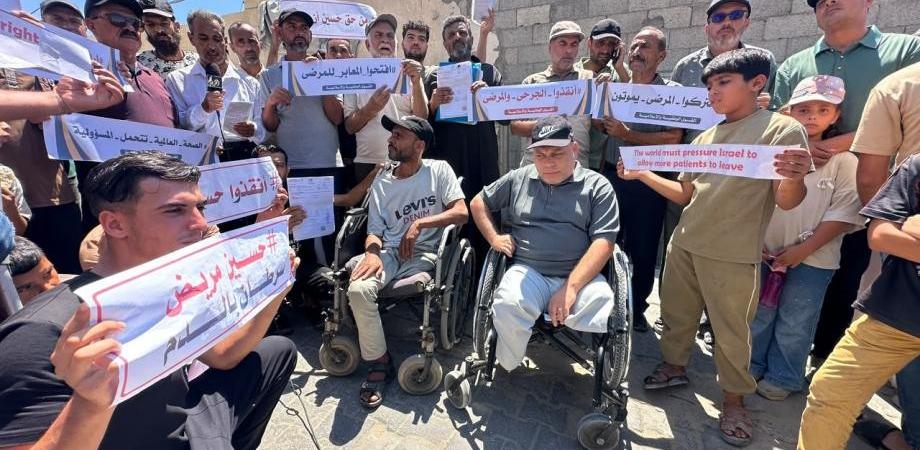
SAFA- Injured and chronically ill Palestinians gathered at Nasser Medical Complex in Khan Younis on Sunday to demand immediate access to medical treatment abroad, warning that continued border closures are putting thousands of lives at risk.
Using wheelchairs, crutches, and hospital beds, the protesters urged the international community and humanitarian organizations to secure the evacuation of patients who have already received medical referrals. They said Israel's continued closure of border crossings has denied them access to specialized healthcare unavailable in Gaza.
Gaza's hospitals continue to struggle with severe shortages of medicines, medical supplies, and specialized equipment after months of war and blockade, leaving many patients without life-saving treatment.
Kawkab Jamil Ghabn said her husband, Yassin Maarouf, suffered severe leg injuries, including gangrene, and requires bone graft surgery and other specialized procedures unavailable in Gaza.
She told Palestine Online that her husband received a medical referral two months ago but has yet to receive permission to travel.
"We keep hearing that his case has been approved or is under review, but no travel date is ever provided," she said. "Every day of delay means more pain and less hope."
Mervat Al-Masri described the condition of her husband, Fadl Al-Masri, who was seriously wounded during the war more than a year ago and remains unable to walk because of severe leg injuries.
She said prolonged hospitalization, multiple fractures, and long-term use of pain medication have also affected his kidney function. Although he has received a medical referral, he has repeatedly been unable to leave Gaza for surgery.
"We are not asking to travel to a specific country," she said. "We only want him to reach a place where he can undergo the surgery that may allow him to walk again."
Jihad Hamouda said her husband suffered a severe hip injury during the war that requires a total hip replacement unavailable in Gaza. She warned that continued delays could permanently damage his remaining hip, leaving him dependent on a wheelchair.
She added that she and their four daughters now carry the family's daily responsibilities because her husband can no longer work or move independently.
The protest also highlighted the plight of patients with chronic illnesses.
Asmahan Abu Sultan said her son, Saeed Fasfous, has lived with a neurogenic bladder since childhood. His condition has progressed to kidney failure, leaving him in need of both bladder and kidney transplants. His father has offered to donate a kidney.
Although all referral procedures have been completed, Saeed remains unable to travel as border crossings stay closed. His condition continues to deteriorate, and he regularly requires blood transfusions and ongoing medical care.
Islam Mohammed Wadi appealed for urgent treatment for her eight-year-old daughter, Seham Mustafa Shaat, who, according to her mother, developed complete quadriplegia and can no longer walk, speak, or move independently.
Wadi said her daughter received a medical referral about a year ago, but the case remains pending with no progress toward travel for specialized treatment and rehabilitation outside Gaza.
The families said thousands of patients and wounded Palestinians remain trapped between urgent medical needs and closed border crossings, while Gaza's healthcare system continues to face critical shortages that prevent hospitals from providing specialized care.


