
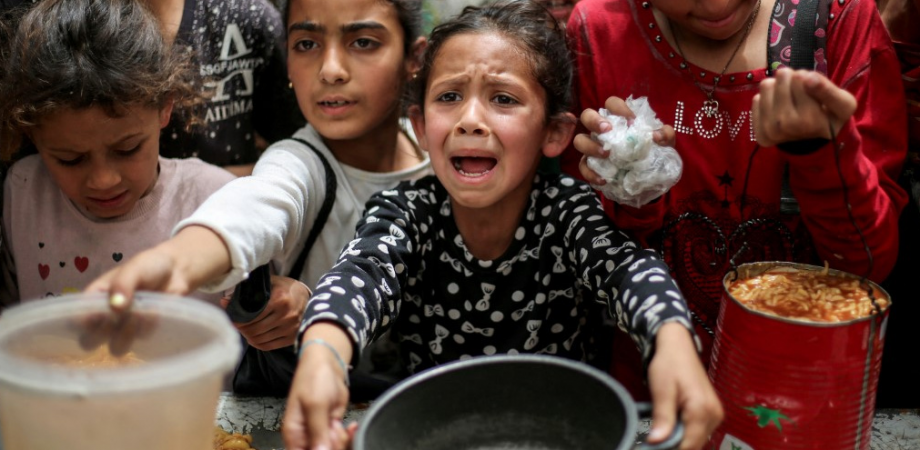
SAFA - Palestinians living close to the so-called "Yellow Line" have mainly been left out of the humanitarian response, while water tankers and aid are concentrated in Gaza City's overcrowded displacement camps.
Residents in these areas face not only the constant threat of Israeli shelling and gunfire but also daily struggles to secure safe drinking water, healthcare, and food amid growing complaints over the lack of basic services.
Stretching from northern to southern Gaza, the areas along the "Yellow Line" are home to thousands of families living in partially damaged houses or fragile tents. Access to even the most basic necessities has become a dangerous daily challenge.
In western Al-Shuja'iyya, east of Gaza City, dozens of residents gather each day hoping a water tanker will arrive. Safe drinking water has become a scarce resource, with hundreds of families competing for limited supplies.
Mohammad Al-Areer told Felesteen newspaper that the area receives only one tanker of drinking water, which meets only a fraction of residents' needs. As a result, many people wait for hours or return home without enough water.
The water shortage is only one part of a much wider humanitarian crisis. Al-Areer said the area has no healthcare services at all.
He recalled an Israeli strike that wounded several civilians, including children, forcing residents to transport the injured to Al-Shifa Medical Complex and Al-Ahli Arab Hospital for treatment.
Education has also become a daily struggle. Children walk long distances to reach makeshift classrooms housed in tents, traveling through rubble-strewn areas exposed to shelling and gunfire.
Similar conditions exist throughout the "Yellow Line," where the Israeli forces maintains control through continuous firepower. The military has effectively rendered nearly 70 percent of the Gaza Strip's 365-square-kilometer territory inaccessible or unsafe for civilians.
Blocked Aid and High Logistical Risks
Wael Safi told Felesteen that families in the area continue to endure severe shortages of water and medical services despite the growing number of displaced residents.
He said children and young people walk long distances to collect drinking water, while sick and injured residents must travel on foot to reach the nearest healthcare facility.
Safi dismissed claims by some humanitarian organizations that security concerns prevent them from operating in the area. He argued that aid is concentrated in western Gaza City, where community kitchens and other relief services are available, while communities near the border receive little assistance despite their urgent needs.
He added that many displaced families have relied on water wells since the beginning of the war because of the limited water supply. Residents also bear the cost of operating generators needed to pump water.
Even drinking water does not reach the communities directly. Instead, residents must walk hundreds of yards to reach water tankers, which avoid entering the area out of fear of Israeli attacks.
Safi said the lack of electricity has further worsened living conditions, forcing residents to walk long distances just to charge their mobile phones, while entire neighborhoods remain in darkness after sunset.
Humanitarian workers say the limited relief efforts near the "Yellow Line" are primarily driven by security concerns. Aid organizations prioritize the safety of their staff and volunteers, leading many to avoid areas considered too dangerous.
They also note that delivering assistance to displacement sites near the "Yellow Line" involves significantly higher logistical costs, particularly for water distribution. Difficult access and the reluctance of some transport companies to operate near the border without additional compensation have further limited humanitarian operations.
Source : Safa News


