
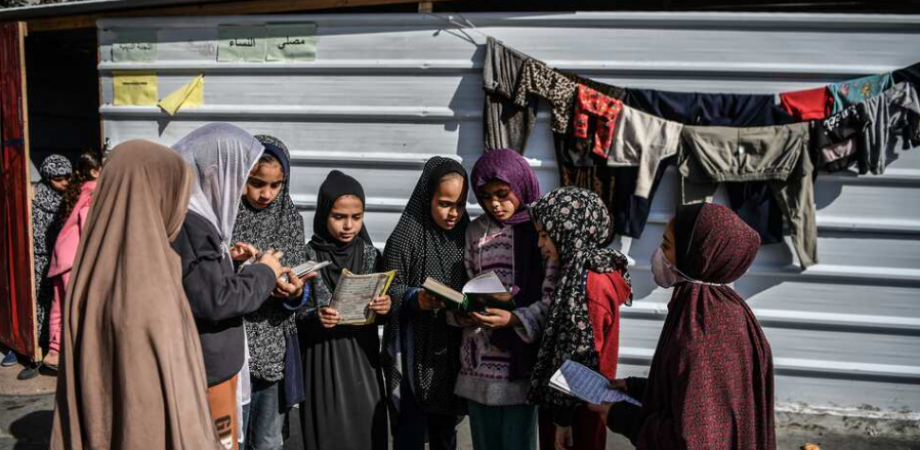
SAFA - More than 625,000 Palestinian students in the Gaza Strip have been deprived of their right to education since the start of the Israeli genocide in October 2023, as widespread destruction of schools and ongoing attacks have left the territory’s education system in near-total collapse, according to official Palestinian figures.
Data released by the Palestinian Ministry of Education and Higher Education and the UN Relief and Works Agency for Palestine Refugees (UNRWA) reveal the scale of the crisis, showing that over 80% of school buildings have been completely or partially destroyed or converted into overcrowded shelters for displaced families, rendering them unusable for education.
The devastation extends beyond infrastructure. Hundreds of teachers and education personnel, along with thousands of students, have been among those killed during the Israeli genocidal war, leaving Gaza’s education sector stripped of both its physical facilities and the human resources essential for restoring learning.
Schools Reduced to Rubble
Officials say the destruction of school buildings is only one obstacle preventing the resumption of education. Ongoing Israeli attacks continue to deny children and their families any sense of safety, making regular classroom learning impossible.
Most surviving schools now serve as shelters for displaced Palestinians, further complicating efforts to reopen classrooms without providing alternative housing. Severe shortages of textbooks, curricula, desks, electricity, internet access, and communication networks have also undermined remote and digital learning initiatives.
Education experts warn that the combination of insecurity, displacement, and infrastructure collapse has created one of the most severe educational emergencies in Gaza’s history.
Emergency Education Initiatives
Despite the destruction, Palestinian educational authorities and civil society organizations continue to pursue emergency measures aimed at preventing an entire generation from losing access to education.
Among the most prominent initiatives are makeshift learning tents established inside displacement camps and shelters, where volunteer teachers provide basic literacy, numeracy, and interactive educational activities for children.
The Palestinian Ministry of Education is also developing condensed educational packages and digital learning materials that students can access through mobile phones whenever communication networks become available, seeking to reduce the accumulated learning losses caused by years of disruption.
Alongside academic efforts, community organizations have expanded psychosocial support activities inside displacement camps, offering recreational and emotional support sessions designed to help children cope with trauma and prepare for a gradual return to learning.
Long-Term Risks
Education and mental health specialists warn that prolonged interruption of schooling carries consequences that may endure for decades, including widening learning gaps, increased risks of illiteracy, worsening psychological trauma, and social withdrawal among children deprived of structured educational environments.
Teachers and education professionals continue to urge parents to enroll their children in any available learning initiative, even those conducted inside tents, stressing that such spaces provide more than education. They also offer psychological support, restore routines, and help children regain a sense of stability and hope amid the devastation.
Officials caution, however, that these emergency measures remain only temporary solutions for an education system devastated by the Israeli genocide. They have renewed calls on the international community to fulfill its legal and moral obligations by ending the Israeli genocidal war, protecting educational institutions, and facilitating the immediate entry of prefabricated classrooms, school supplies, and other essential educational resources into Gaza.
Source : Safa News


