
SAFA - Settlement expansion in the Jordan Valley is extending beyond established settlements, with new pastoral outposts emerging nearly daily. These outposts are seizing significant tracts of farmland and altering conditions on the ground.
As settlement expansion accelerates, areas of the Jordan Valley are increasingly being designated for projects intended to alter the region’s character and consolidate control. Simultaneously, military measures and administrative orders are being employed to appropriate additional land, expand settlements, and legalize outposts.
Israeli forces are seeking to connect these outposts with major settlement blocs in the West Bank, facilitating control over key water resources and fertile land in the northern Jordan Valley.
This process has reduced available grazing areas and prevented Palestinian shepherds from accessing their pastures.
Pastoral outposts in the Jordan Valley are gradually expanding, often amid settler attacks and increased restrictions on Palestinians. This expansion places Bedouin and agricultural communities at risk of displacement.
The establishment of these outposts frequently leads to the construction of roads and infrastructure, resulting in contiguous settlement areas that reinforce control over additional parts of the Jordan Valley, which constitutes approximately one-third of the West Bank.
A Fierce Onslaught
Ibrahim Abayat, who leads the Fasayil village council in Jericho, says the Jordan Valley is facing a strong wave of settlement activity. He describes ongoing demolitions and uprooting that aim to force Palestinian residents off their land.
Speaking to Safa News Agency, Abayat said the Israeli occupation forces are trying to build more settlements and outposts, especially pastoral ones, and take large areas of Palestinian land.
This keeps farmers from their land and threatens their way of life. He notes that many new pastoral outposts are now in Jericho, Al-Auja, and the northern Jordan Valley. Settlers use these outposts to take over grazing lands and drive out shepherds, who often face attacks and harassment from both the Israeli forces and settlers.
Abayat says there are four or five Palestinian villages in the Jericho area where older Israeli settlements were built, and now construction and expansion are ongoing.
Abayat says that since October 7, 2023, attacks by the Israeli occupation forces and settlers in the Jordan Valley have increased more than ever before. This has made life harder for Palestinians and led to the displacement of many Bedouin communities.
He stresses the need to support and strengthen the resolve of Jordan Valley residents as they face plans for uprooting and forced displacement. He also calls for full protection from attacks by the Israeli forces and settlers. Despite the settlement expansion, residents are staying in their homes, on their land, and with their animals, even though these areas are now surrounded by outposts and at risk of being taken.
Undermining the Palestinian Presence
Hassan Mleihat, who oversees the Al-Baydar Organization for the Defense of Bedouin Rights, says the Jordan Valley, especially the northern part, is seeing a sharp rise in violations by Israeli occupation forces and settlers against Palestinians.
In an interview with Safa News Agency, Mleihat said these attacks are part of a plan to weaken the Palestinian presence. He explained that settlement expansion, land and resource seizures, and creating a hostile environment are all meant to push Palestinians out.
Mleihat says these actions are part of a steady policy to change the people and the land in the Jordan Valley, especially in the north. This area is very important for Palestinian farming, the economy, and strategy.
The report shows that from 2023 to 2026, there was a sharp increase in violations in the northern and central Jordan Valley, with over 2,500 attacks on people and land recorded.
Mleihat says that during this time, about 50 pastoral settlement outposts were set up and expanded in the northern and central Jordan Valley. Around 300,000 dunams of land were taken or made off-limits to Palestinians.
He notes that over 50,000 dunams of farmland and grazing land were damaged, and more than 5,000 sheep and cattle were stolen, taken, or lost because of the attacks.
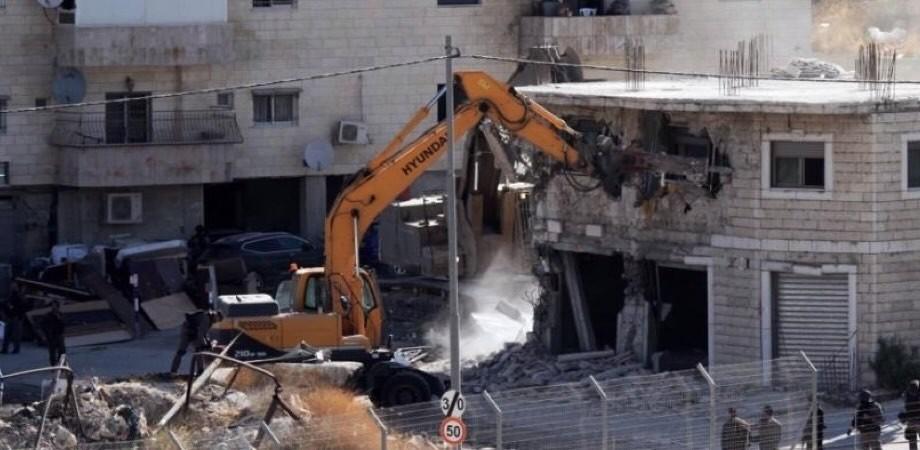
He explains that over 30 Bedouin and pastoral communities faced the risk of being moved or evicted, and more than 1,000 Palestinian families were affected by harassment and displacement. Since 2023, the Israeli forces have demolished or taken over more than 800 buildings, issued more than 1,200 demolition orders, and seized more than 300 pieces of farm equipment, water tanks, and other tools people need for their work.
He adds that the Israeli forces are still using military and administrative actions against Palestinians. These include demolition and stop-work orders, tearing down homes and buildings, blocking roads with dirt mounds and checkpoints, limiting movement, declaring large areas as military training zones, and forcing families to leave their homes, either for a short time or for good. All of this makes life even harder for the residents.
Mleihat says that expanding pastoral settlement outposts is now one of the most serious means of controlling land in the Jordan Valley, especially in the north. Settlers are slowly taking over grazing lands and stopping owners from using them, which creates a new situation that limits Palestinians’ use of their land and weakens their long-standing presence in the area.
Source : Safa News


