
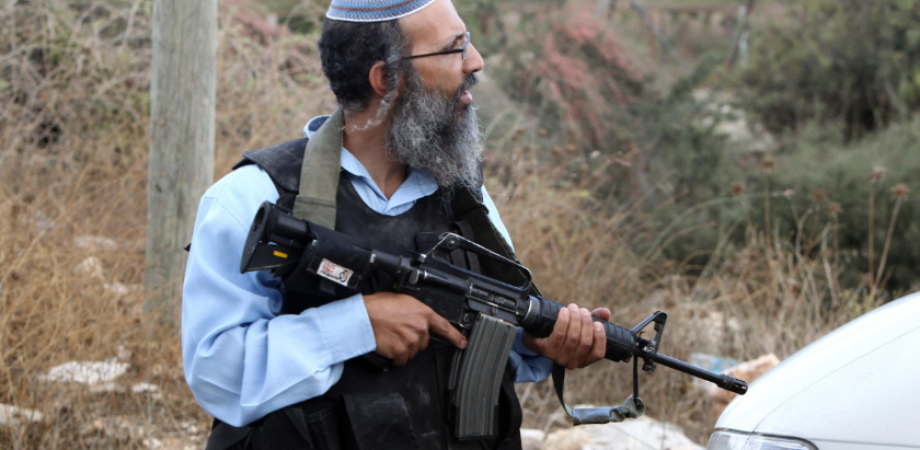
SAFA - Residents of the Arab al-Ka'abneh community near Taybeh, east of Ramallah, report that settlers have been entering their encampment daily.
Daily settler attacks have targeted the homes, land, and property of the Arab al-Ka'abneh community, further disrupting daily life.
Community members say these actions are intended to force them from the area and are part of broader policies affecting Palestinian communities.
Families who depend on livestock and agriculture now face ongoing attacks and harassment, with grazing areas reduced by new restrictions. Despite these challenges, community members state they remain committed to staying on their land amid threats to their existence and efforts to displace them.
According to residents, settler attacks on the community have intensified since last Thursday. Several individuals sustained injuries following an attack on the Naif Kaabneh family, attacking their homes, taking their livestock, and cutting their water lines.
Difficult Living Conditions
Ali Muhammad, a resident of the Arab Kaabneh community, says, "We used to live in the Arab al-Malihat communities in the al-Mu'arrajat area, but we were forced to relocate to the al-Taybeh area due to settler attacks, hoping to find a safer place. However, the attacks did not stop and followed us here."
Muhammad also told Safa News Agency, "We are a large community of about 21 families, but we live in very difficult conditions. We have no water and no protection from settler attacks." He continues, "We face daily attacks and harassment. We are always afraid for our children and our property. We don't know where to go. Our lives are at risk every moment, and we fear being forced to leave again."
He reports that settlers have taken approximately 255 sheep, resulting in significant losses for the families. Livestock is the community's primary source of income, and the loss has further exacerbated their difficult living conditions.
He adds, "The settlers come with tractors, attack us, and hurl insults. We stay awake day and night, anticipating what they might do to us, living in constant fear that the situation will escalate into a larger attack."
"What we're experiencing isn't an isolated incident. The attacks keep happening, and we don't know what will happen to our homes and livestock. After being forced to leave our first home, we now fear we might have to leave this place too."
Mohammed adds, "We just want to live safely on our land and be able to raise our children without fear."
He continues, "We've been in this area for two years, and no one has checked on us, not the Red Cross, nor any local or international organization. They've left us to face our circumstances and our fate alone."
The residents of the community lack the most basic necessities of life, as they do not have water or electricity, which increases the harshness of the living conditions they face.
Forced to Leave Their Homes
Mohammed concludes, "We even have to buy water, despite its high cost and our difficult financial situation, especially after losing a large portion of our livestock." He continues, "In winter we suffer from the cold, and in summer from the heat, and we receive no support in any season. We live in tents that offer no protection from the cold or the heat, yet we are forced to live in them."
He affirms that the Israeli occupation forces are trying to displace them once again and uproot them from their lands for the benefit of settlers and settlement expansion, adding, "But we will remain steadfast on our land, and we will not give it up despite all the attacks and pressures we are subjected to."
Mohammed appeals to local and international organizations and institutions to support the community and help them stay on their land. He calls for the Ministry of Agriculture and the relevant authorities to compensate them for the losses they have suffered as a result of settler attacks and the theft of their livestock, with the aim of providing the most basic necessities of life for their children and families.
Source : Safa News


