
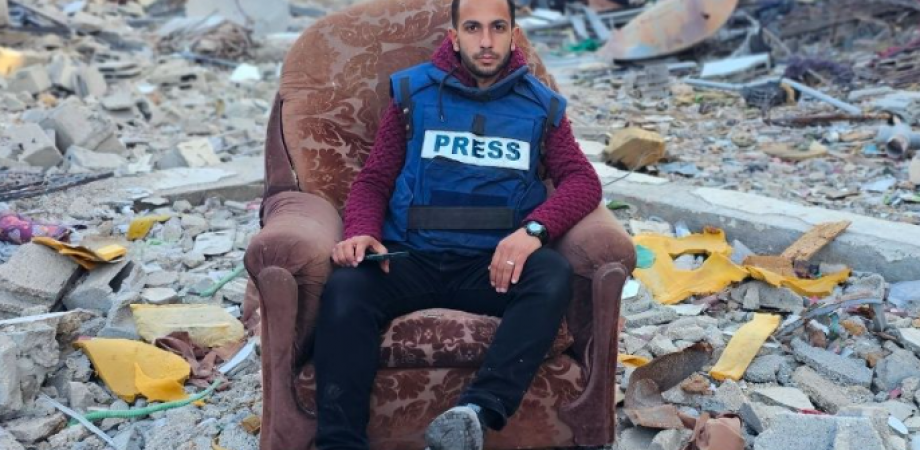
SAFA - One year has passed since six Palestinian journalists were killed in an Israeli strike on a journalists’ tent near Al-Shifa Hospital in Gaza City, an attack that marked another devastating chapter for Palestinian media workers covering the genocide in the Gaza Strip.
The journalists were Al Jazeera correspondents Anas al-Sharif and Mohammed Qreiqeh, along with Ibrahim Zaher, Mohammed Noufal, Moamen Aliwa, and Mohammed al-Khaldi.
Armed with cameras and microphones, the six journalists had been reporting from one of the world's most dangerous environments for media workers before they were killed in the Israeli strike on August 10.
Al-Sharif had become a prominent voice reporting from northern Gaza, documenting Israeli occupation, bombardment, displacement, and hunger and bringing the experiences of Palestinians in the besieged territory to audiences around the world.
Qreiqeh continued reporting from the field alongside his colleagues, with their footage becoming part of the extensive visual record of the war and its impact on Gaza's population.
Their deaths represented not only the loss of six journalists but also the elimination of an entire reporting team whose cameras had documented events from the heart of Gaza.
A year later, their photographs, reports, and testimonies remain part of the enduring record of the Israeli genocide. The cameras they carried may have fallen silent, but the images and stories they documented remain.
UNESCO condemned the Israeli killing of the six Palestinian journalists and called for a comprehensive and transparent investigation, stressing that attacks against journalists covering armed conflicts are unacceptable and contrary to international humanitarian law.
One year after their deaths, questions over accountability remain.
For Gaza's journalists, the six leave behind a message embodied in their work: to document, to report, and to ensure that the suffering of a people and the events they witnessed are not buried beneath the rubble.
Source : Safa News


