
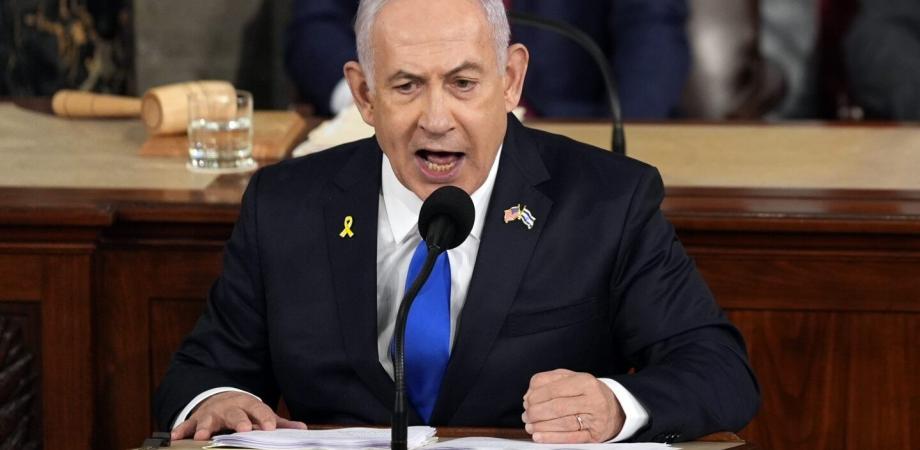
SAFA — Tensions surrounding the proposed Gaza agreement intensified on Monday after Israeli Prime Minister Benjamin Netanyahu rejected a plan introduced by the so-called “Peace Council,” raising doubts over efforts to advance to the second phase of the agreement.
The proposal, consisting of 15 provisions, outlines a gradual process that includes placing heavy weapons held by Palestinian factions in storage under Palestinian supervision, ending hostilities, withdrawing Israeli forces, reopening border crossings, and gradually introducing an administrative committee alongside international forces.
Netanyahu, however, rejected the plan and insisted that the complete disarmament of Palestinian resistance groups must take place before any Israeli military withdrawal.
Observers say this position contradicts the framework outlined in the proposal, which links the weapons issue to a broader, phased process involving Israeli withdrawal and other measures.
Analysts warn that Netanyahu’s rejection could derail progress and return negotiations to square one, potentially prolonging the crisis and worsening humanitarian conditions in the Gaza Strip.
Political writer Wissam Afifa said Netanyahu’s position not only challenges the agreement itself but also places the administration of U.S. President Donald Trump under pressure.
The plan is believed to have been personally backed by Trump and has received international support.
Afifa said Palestinian factions and mediators had already made significant concessions during negotiations, particularly on the sensitive issue of weapons.
He said that Netanyahu’s demand to make disarmament a precondition for withdrawal fundamentally changes the framework of the agreement.
“The issue now shifts to Washington,” Afifa said, suggesting that the United States must either pressure Israel to adhere to the original framework or seek a new compromise that addresses Israeli objections.
He warned that reopening the agreement for renegotiation could prolong talks and provide additional time for realities on the ground to change.
Israeli affairs analyst Amin Al-Hajj said that Netanyahu is attempting to reinterpret the agreement in a way that delays its implementation. By making disarmament a prerequisite, he said, Israel could indefinitely postpone key obligations under the proposed framework.
Al-Hajj also suggested that Trump and Netanyahu initially supported the establishment of the “Peace Council” as a means of bypassing growing criticism from international institutions.
However, he said that Netanyahu now appears unwilling to accept a framework that would impose binding commitments on Israel.
Al-Hajj said domestic political considerations could also be influencing Netanyahu’s position, as any significant political settlement could threaten his governing coalition, which includes right-wing factions opposed to concessions.
“Keeping negotiations ongoing reduces international pressure and gives Netanyahu room to maneuver,” Al-Hajj said, describing the delays as a deliberate strategy rather than a side effect of the negotiations.
According to the analysts, the situation could now move in one of three directions: an agreement could be reached, the current stalemate could continue, or Israel could return to full-scale war in Gaza.
They said that Netanyahu’s decisions may be influenced as much by his political survival as by security considerations, with each scenario carrying different implications for his governing coalition and electoral prospects.
The coming days are expected to show whether diplomatic efforts can overcome the deadlock or whether negotiations will stall further, leaving Gaza facing prolonged uncertainty without a clear path toward a lasting ceasefire.
Source : Safa News


