
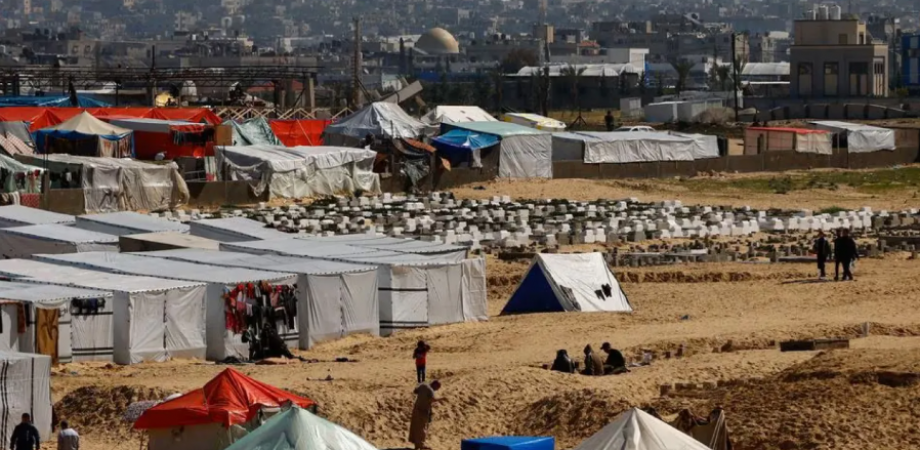
SAFA - After months of genocide and forced displacement, Palestinians in the Gaza Strip continue to endure violations of the ceasefire agreement by the Israeli occupation, prolonging widespread suffering across the devastated territory.
Displaced Palestinians are calling for an end to Israeli bombardment and genocidal crimes, the reconstruction of homes and infrastructure destroyed during the war, and the restoration of basic living conditions.
Families who have lost their homes hope to return to their neighborhoods and receive temporary “caravans” to provide shelter until a comprehensive reconstruction process begins. Others are calling for the reopening of crossings, the entry of food and medicine into Gaza, and an end to restrictions that continue to impede daily life across the coastal enclave.
Yet these hopes are overshadowed by deep fears over continued military aggression and threats from Israeli Prime Minister Benjamin Netanyahu and military leaders regarding a possible return to a wider war.
Disputes over the implementation of the next phase of US President Donald Trump’s plan have further intensified those fears, leaving the ceasefire for displaced Palestinians as a fragile chance to survive rather than a guarantee of lasting stability.
Basic Shelter Becomes a Dream
At one of Gaza City’s displacement shelters, the aspirations of displaced families begin with the simplest necessities: a roof capable of withstanding strong winds, walls to protect their children, and a place where they can close the door at night without fearing rats and other hazards entering their shelter.
Families whose homes were destroyed by the Israeli occupation forces during the genocide told Felesteen newspaper that they ultimately need permanent homes. For now, however, they say a caravan offering privacy, safe drinking water, electricity, a bathroom, and a secure place to sleep would provide much-needed relief while they wait for reconstruction to begin.
Mariam Deeb, who lost her home during the genocide in Jabalia refugee camp in northern Gaza, said, "We want a genuine ceasefire that can serve as a real beginning for a return to life, not merely a brief period of calm.”
Mariam, 50, lives with her seven-member family under a tent on a plot of land near the fishermen’s port west of Gaza City. The family settled there after repeated displacement forced them to move between cities and governorates across the Gaza Strip since the beginning of the genocide on October 7, 2023.
She said life in the tent had become an unbearable daily burden, stressing the need to end the suffering of displaced Palestinians and launch the reconstruction process.
Life Amid the Tragedy
At another shelter described as unfit for human habitation, 24-year-old Rana Saber and her family continue to endure the consequences of the destruction of their home in Beit Lahia, northern Gaza.
Rana, her husband, and their children have been forced to live in an area lacking even the most basic necessities. The family found no shelter other than a tent erected next to the Al-Yarmouk landfill in central Gaza City.
For the family, temporary mobile caravans represent a necessary solution at this stage, particularly for households with no homes to return to while reconstruction is expected to require considerable time and resources.
The family is also calling for construction materials and heavy machinery to enter Gaza to clear the vast amounts of rubble, along with food, medicine, hygiene supplies, water, and other basic necessities.
Alaa Al-Sharbasi, whose home was destroyed during the war, said his greatest hope is to see the ceasefire develop into a long-term path toward stability and the withdrawal of occupation forces from Gaza.
Since losing his home in the Shuja’iyya neighborhood east of Gaza City, Al-Sharbasi and his family have spent a prolonged period in displacement. For them, reconstruction is no longer simply a future project but an essential condition for restoring a normal life.
“Above all, my children need to feel safe, return to education, and have access to healthcare,” he said. “Our family also needs a home that can restore some of the life we lost during the genocide.”
Fragile Ceasefire, Persistent Fears
The hopes of these families remain inseparable from their fears, particularly following Netanyahu’s rejection of the 15-point plan that emerged from the Cairo meetings.
Hamas, meanwhile, showed significant flexibility during negotiations with the Peace Council and mediators over the ceasefire agreement and agreed to a provision allowing heavy weapons in Gaza to be stored under Palestinian control.
The Israeli occupation forces currently control vast areas of the Gaza Strip, estimated at around 70 percent, beyond what is known as the “Yellow Line.” Israeli forces continue to open fire on Palestinians who approach these areas while carrying out demolitions and destroying remaining residential structures.
For displaced Palestinians, a ceasefire cannot provide lasting security without concrete guarantees to prevent the resumption of war, compel the withdrawal of occupation forces from Gaza, allow humanitarian aid and essential supplies to enter the territory, and facilitate the removal of rubble and reconstruction of homes and infrastructure.
For families living under tents and in makeshift shelters, the demand is ultimately simple: a safe place to live, a return to their communities, and a genuine end to the destruction that has displaced them for years.
Source : Safa News


