
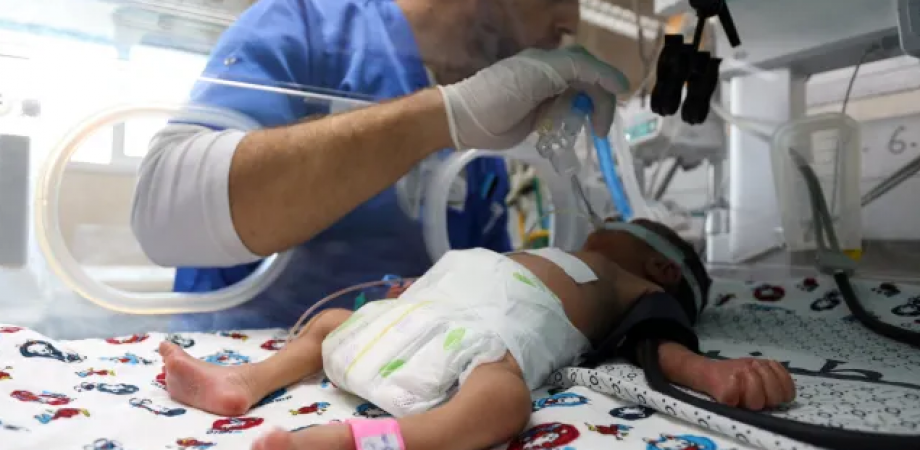
SAFA - Medical oxygen production and cylinder-filling capacity in the Gaza Strip are rapidly deteriorating, the Palestinian Centre for Human Rights (PCHR) warned Monday, saying the crisis is part of the broader collapse of the territory’s healthcare system under Israel’s ongoing siege.
In a statement, PCHR said the oxygen crisis has been driven by the widespread destruction of healthcare facilities, disruptions to their operations, the depletion of medical equipment, and severe shortages of medicines and essential medical supplies.
The organization also pointed to restrictions on the entry of equipment, spare parts, and other materials required to maintain and restore Gaza’s healthcare infrastructure.
Oxygen Capacity Deteriorating
PCHR warned that continued Israeli restrictions on the entry of new oxygen-generation stations and essential spare parts are placing the lives of patients and wounded people at increasing risk and could disrupt critical medical services as healthcare needs continue to rise.
Mazen Al-Arayishi, director-general of engineering and maintenance at Gaza’s Ministry of Health, said only 12 of the Strip’s 34 oxygen-generating stations are still operating, and 22 have been taken out of service.
The remaining stations are operating beyond their intended capacity under extremely difficult technical conditions, with recurring mechanical failures and limited capacity to carry out essential maintenance, he said.
The oxygen-cylinder filling system is facing a similar crisis. Only four of 30 cylinder-filling machines remain operational, leaving Gaza’s ability to produce, fill, and distribute medical oxygen vulnerable to collapse at any time.
Al-Arayishi warned that the failure of another oxygen-generation station or any further decline in production capacity could disrupt essential medical services, limit hospitals’ ability to perform surgeries and treat critically ill patients, and place oxygen-dependent patients at immediate risk.
PCHR linked the oxygen crisis to the wider destruction of Gaza’s healthcare infrastructure, including hospitals, health centers, ambulances, medical equipment, and other vital facilities.
According to figures cited by the World Health Organization, 34 of Gaza’s 36 hospitals, or 94%, have been damaged, while only 18 hospitals, half of the total, remain partially operational.
The rights group stressed that the scale of the crisis cannot be measured solely by the number of oxygen-generation stations destroyed or rendered inoperable. It also reflects the erosion of the technical and institutional capacity required to maintain, repair, and operate the facilities that remain.
PCHR warned that the threat to patients extends beyond the destruction of healthcare facilities to the continued deterioration of the capacity to sustain those still functioning, turning Gaza’s healthcare crisis into a cumulative and ongoing collapse.
Calls for Urgent International Action
PCHR said international humanitarian law places obligations on an occupying power to ensure access to essential medical supplies and preserve healthcare services and hospitals.
It called on the international community and states party to the Genocide Convention to take immediate and effective measures to fulfill their legal obligations and ensure compliance with provisional measures issued by the International Court of Justice.
The organization also called on Israel, as the occupying power, to remove obstacles hindering Gaza’s healthcare system and urgently and sustainably allow the entry of medical oxygen, oxygen-generation stations, cylinder-filling equipment, spare parts, and other essential medical and technical supplies.
PCHR further urged the rehabilitation and restoration of oxygen-production facilities and called for the protection of hospitals, patients, and healthcare workers in accordance with international law.
Source : Safa News


