
SAFA - Beside the rubble of his destroyed home, just 500 meters from the “Yellow Line” south of Gaza City’s Zeitoun neighborhood, 25-year-old Bilal Al-Turk plants a bed of mint in a patch of sand surrounding his wedding tent.
In a place where the occupation continues to encroach, swallowing up more land, a haunting silence hangs over the area, broken only by the constant hum of quadcopters and drones. With even the basic necessities of life absent, the young man has chosen to get married and make a home out of fabric.
From Displacement to a Tent Home
Bilal’s story dates back to August 10, 2025, when Israeli bombardment forced his family to flee to the southern Gaza Strip. When he eventually returned, the family building where he had lived with his relatives had been reduced to rubble. Recalling that moment to Felesteen newspaper, Bilal says, "When I came back the last time, I found the building in ruins. We were displaced.”
Faced with a severe shortage of shelter supplies, the family split up in an effort to find somewhere to stay. His parents and younger brother settled in a tent farther away, outside Zeitoun, while Bilal remained on his own, securing a second tent beside the ruins of his destroyed home.
Securing the tent was no easy task. Bilal had to pull wooden planks out of the rubble with his own hands to put up his shelter. He added a makeshift fabric room for receiving guests, along with beds of mint that he planted to create something resembling a “home.”
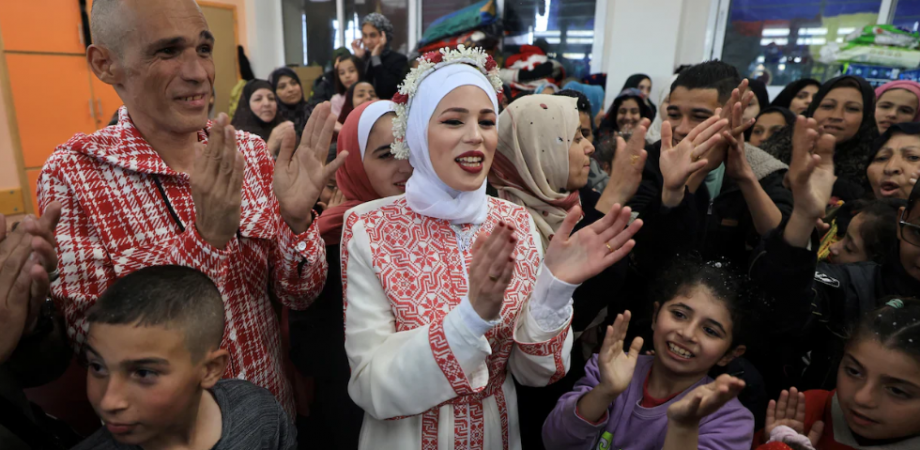
But Bilal’s story is not an isolated one in this threatened stretch of Gaza. A deeper pattern is emerging: 30 grooms have held their weddings in the area’s camps over the past eight months, according to Sami Al-Daash, the director of the camps there.
On their decision to marry, Bilal says he and his wife did not dwell on the complicated challenges ahead: “We put our trust in God. This is life, and we have to carry on. We don’t know where things are headed, but life does not stop because we live in a tent.”
The newlyweds face each day with fear hanging over them. Bilal, an aluminum technician who has been out of work for three years, has no steady source of income. He relies on aid and runs a small stall in Gaza City’s Saraya market, selling whatever goods he can find.
Living Under Daily Gunfire
Every day, Bilal walks four kilometers to work, leaving at 8 a.m. and returning at 7 p.m. His long absence fuels a cycle of anxiety: she worries about his safety on the road, while he spends the day worrying about her.
And making their already harsh life even harder is the struggle to carry water whenever it becomes available, amid severe shortages.
Every evening at 7 p.m., Israeli vehicles begin “sweeping operations,” firing live ammunition that whistles repeatedly over the tent.
“The fabric is all that protects us,” Bilal says of his tent. “You wake up afraid, living in terror. At any moment, a quadcopter could drop a stun grenade or fire a missile, and we could all be forced to flee or get hurt. You live with your hand over your heart, but we’ve gotten used to it.”
Though fear follows them with every sunset, the newlyweds remain determined to endure “until God makes a way out,” hoping to obtain a small caravan to shield them from the summer heat and the coming winter cold until the wheels of reconstruction begin to turn.
Bilal looks at his tent and the green mint seedlings clinging to the sand, then ends his account with a steadfast smile that rises above the rubble: “Starting a family is a right. Every Palestinian young man has the right to marry, settle down, and build a home. Life will not stop, even if that home is beneath a sheet of fabric.”
Source : Safa News


