
SAFA — Israeli restrictions on movement and access across 65% of the Gaza Strip are the main obstacle preventing humanitarian agencies from delivering aid and preparing shelters for hundreds of thousands of displaced Palestinians ahead of winter, the United Nations said Wednesday.
“Our humanitarian partners stress that the main obstacle is restrictions on access of 65% of Gaza’s land,” UN spokesman Stéphane Dujarric told reporters in New York. “The remaining 35% is already overcrowded.”
The restrictions come as humanitarian agencies race to protect displaced Palestinians from winter rains, flooding and deteriorating shelter conditions.
According to the UN Office for the Coordination of Humanitarian Affairs (OCHA), 451 displacement sites housing an estimated 464,402 Palestinians have been identified as being at high risk of flooding.
Humanitarian teams are assessing the sites to determine whether flood-prevention measures are possible. Where conditions cannot be made safe, agencies are examining options for the voluntary relocation of families to safer areas.
Dujarric said aid teams had examined three potential relocation areas for temporary shelters for Palestinians who choose to leave flood-prone sites or areas near unstable structures.
Preparing new sites, however, presents enormous challenges. Humanitarian teams must address unexploded ordnance, level terrain, install water and drainage systems and lighting, open access roads and resolve land-related issues before families can safely relocate.
Israeli Restrictions Hamper Winter Preparations
Humanitarian agencies urgently need Israeli restrictions eased to allow the entry of heavy machinery, spare parts, engine oil and other essential equipment needed to prepare displacement sites and infrastructure for winter, Dujarric said.
Funding is also needed for emergency fuel and durable materials to reinforce damaged structures.
OCHA has repeatedly warned that Israeli restrictions on the entry of critical equipment, including generators, engine oil and spare parts for vehicles and rubble-removal machinery, are undermining humanitarian operations across Gaza.
The shortages have affected food distribution, water trucking, ambulances, healthcare facilities and debris removal.
Medical shortages are compounding the crisis. OCHA reported last week that life-threatening gaps persist in specialised cancer treatment, including shortages of essential chemotherapy and radiotherapy supplies, while shortages of generator engine oil, spare parts and other materials are severely affecting diagnostic services.
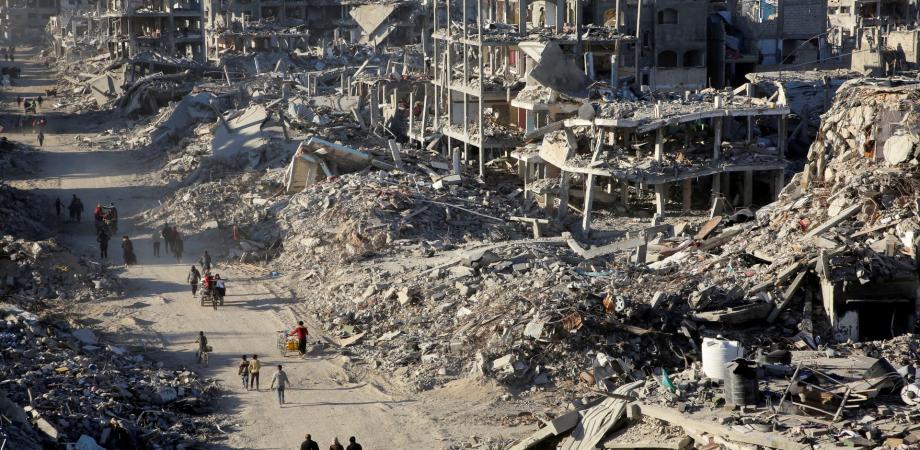
The approaching rainy season poses another threat to hundreds of thousands of Palestinians living in tents and makeshift shelters after repeated displacement and widespread destruction.
OCHA says 94% of Gaza’s population requires shelter assistance, while about 65% of households are living in tents or other makeshift shelters.
More Than 74,000 Palestinians Killed
The UN warning comes amid the continuing toll of Israel’s war on Gaza and repeated deadly attacks despite the ceasefire that took effect in October 2025.
According to Gaza’s Health Ministry, at least 74,040 Palestinians have been killed and 175,168 wounded since October 7, 2023.
Since the ceasefire took effect on October 11, 2025, at least 1,439 Palestinians have been killed and 5,052 wounded, while 834 bodies have been recovered from beneath the rubble, according to the ministry’s latest figures.
As winter approaches, humanitarian agencies warn that Gaza’s already severe shelter crisis could worsen significantly unless restrictions on humanitarian access are eased and essential equipment, fuel, construction materials and medical supplies are allowed to enter and move across the Strip.
Source : Safa News


