
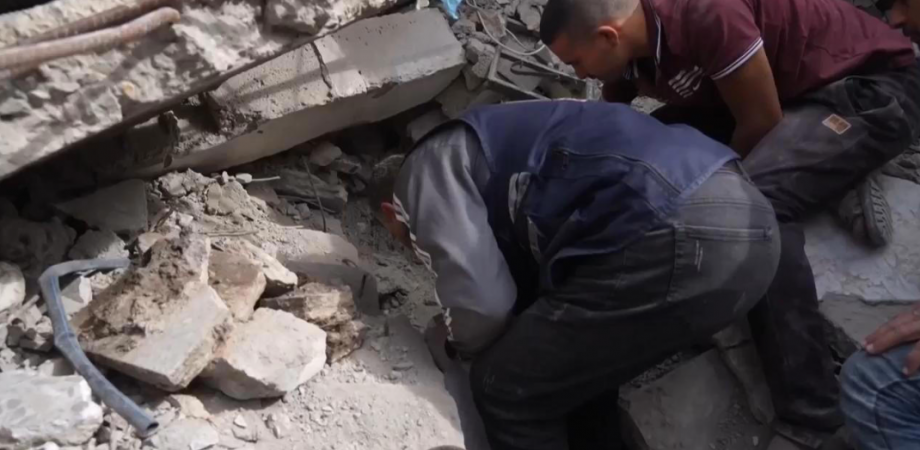
Search teams have begun painstaking work across parts of Gaza to recover the bodies of people who remain missing beneath the wreckage of destroyed homes. The effort brings together local rescue crews and international humanitarian staff, operating in neighbourhoods where entire residential buildings collapsed onto families sheltering inside.
The initial operations are concentrated on small housing blocks that were obliterated with their occupants still within. One of the first sites is a family home that had been sheltering dozens of displaced people, including children, women and elderly relatives, when it was levelled. Relatives of the missing stand alongside emergency workers, hoping for news that may finally allow them to mourn and bury their dead. The searches will continue for as long as limited funding and basic equipment allow.
Rescue crews are working with little more than hand tools. Most heavy machinery was destroyed earlier in the genocidal war, leaving civil defence teams severely under-equipped for the scale of the task. Thousands are believed to remain buried under concrete and twisted metal. Without bulldozers and excavators, recovery is slow and physically punishing, while families wait months for the chance to lay loved ones to rest with dignity.
The absence of meaningful international support has sharpened local anger. Heavy equipment was swiftly mobilised when Israeli prisoners were to be recovered, yet similar assistance has not been granted to retrieve the remains of Palestinian dead. This disparity has raised uncomfortable questions about whose lives, and deaths, are deemed worthy of urgent action under the banner of human rights and humanitarian law.
Legal obligations are clear: the dead must be respected, and the missing accounted for. Calls have been renewed for international bodies and ceasefire guarantors to intervene so that machinery and specialist teams can enter Gaza. As recovery efforts expand, families have been warned that many remains may be badly decomposed or unrecognisable, a grim consequence of the sheer force used to destroy entire streets and the long months that have passed since.
Source : Safa News


