
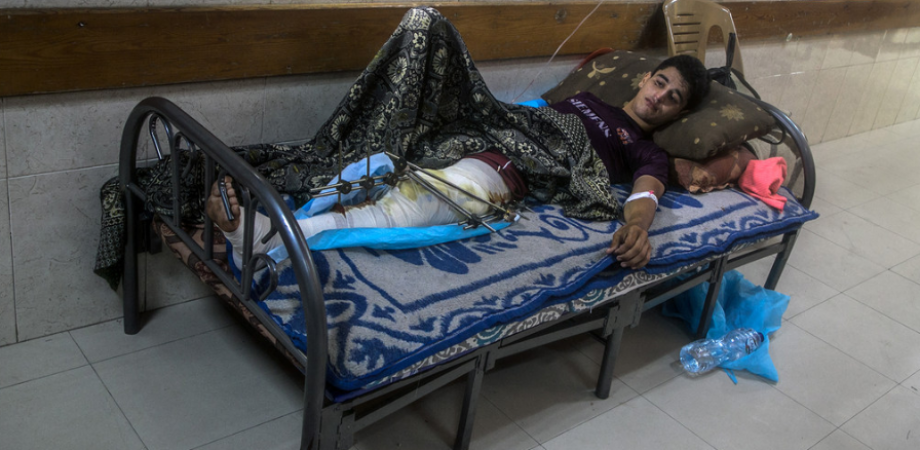
Gaza’s hospitals are being forced to work by torchlight as electricity disappears and fuel runs dry, exposing a health system pushed to the brink by a prolonged genocidal war. At Al-Awda Hospital, doctors and nurses move between wards with handheld flashlights, improvising care while generators fail and power cuts stretch on. What was once a fragile system is now fighting simply to stay open.
Hospital officials say the pressure did not begin this year. Chronic shortages, ageing equipment and unreliable electricity had already strained services. The genocidal war intensified every weakness at once: essential medicines are scarce, diagnostic machines sit idle for lack of parts, and staff are stretched across longer shifts as colleagues are forced to leave. The result is a daily struggle to meet even basic medical needs, particularly for children, mothers and emergency cases.
Fuel has become the most immediate threat. Al-Awda requires more than a thousand litres of diesel each day to operate safely, yet receives far less. With supplies rationed, entire buildings have been shut down and the hospital has switched to emergency-only care, limiting procedures to urgent, life-saving surgeries. Surgical theatres and administrative blocks have already fallen silent, while three facilities, including two field hospitals, depend on an uncertain flow of power to function at all.
The wider picture is equally stark. Civilian infrastructure across Gaza has been devastated, and mass displacement has overwhelmed the remaining hospitals. Health authorities warn that without immediate access to fuel and medical supplies, services could halt entirely. As specialised care and diagnostic services remain suspended, patients face worsening outcomes, underscoring an urgent plea for sustained international action to keep Gaza’s hospitals alive.
Source : Safa News


