
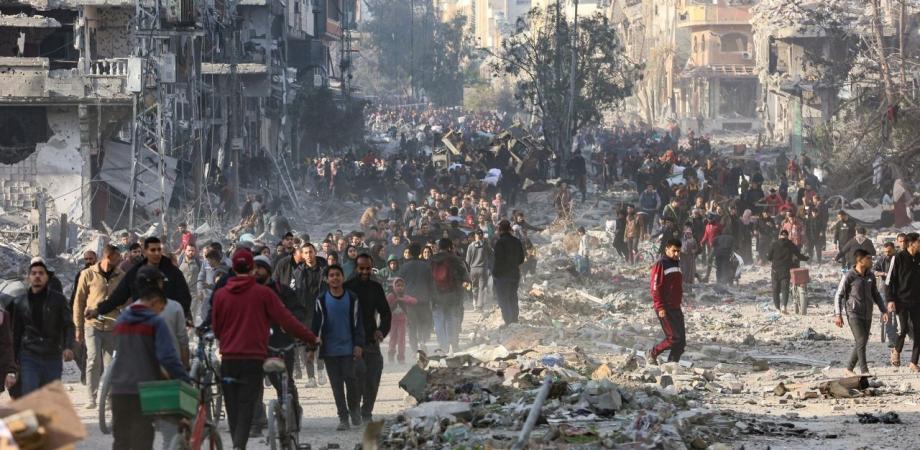
In a fragile tent on the outskirts of Gaza City, preparing food has become a dangerous ordeal rather than a simple daily routine. With cooking gas absent for nearly two years, families forced into displacement rely on open flames fuelled by wood, scraps and plastic to prepare meals. The makeshift fires have turned basic survival into a constant hazard, leaving women and children bearing the physical scars of a life lived under relentless deprivation during the genocidal war.
For 39-year-old Rawiya Abdul Aal, the danger became painfully real while she was preparing a modest meal for her children inside the cramped shelter where they now live. As she cooked over a wood fire, a pot of boiling food suddenly tipped over, spilling across her hands and feet. In the confined space, surrounded by her children, there was little room to escape the scalding liquid. She was rushed to hospital, where doctors treated severe burns and changed her bandages daily for a week as she endured intense pain and the fear that her injuries might leave her unable to care for her family.
Children have also become frequent victims of these fires. Seven-year-old Abeer Al-Joujo approached her mother while food was being prepared over an open flame inside their temporary shelter. The fire suddenly flared and spread, leaving the child with burns to her head and face. Now undergoing ongoing treatment, Abeer’s small face is often hidden beneath layers of white bandages. Doctors warn she may require long-term medical care and possible reconstructive procedures in the future, a prospect made more uncertain by the severe shortage of medical supplies across the territory.
Medical workers report that such cases have become increasingly common. Clinics across Gaza now treat dozens of burn injuries each day, with children and women accounting for the vast majority. The absence of cooking gas, combined with overcrowded displacement shelters and the psychological strain on families, has created conditions where accidents involving open flames occur frequently. Many of the injuries are second-degree burns, while severe cases require prolonged hospitalisation and specialised care that is increasingly difficult to provide.
Treating burn injuries in Gaza has become an immense challenge as medical resources remain critically limited. Recovery is often slow, and patients may be left with permanent scars and disfigurement that carry deep psychological consequences, particularly for children when injuries affect visible areas such as the face or hands. Doctors warn that inadequate pain management can also lead young patients to develop lasting fear of hospitals and refuse further treatment.
Across Gaza’s makeshift shelters, the same tragedy repeats itself. A mother tries to cook a meal to ease her children’s hunger, and a sudden flare of fire leaves another family marked by injury. In a territory already devastated by the genocidal war, the flames used to prepare food have become yet another threat consuming childhood and motherhood alike.
Source : Safa News


