
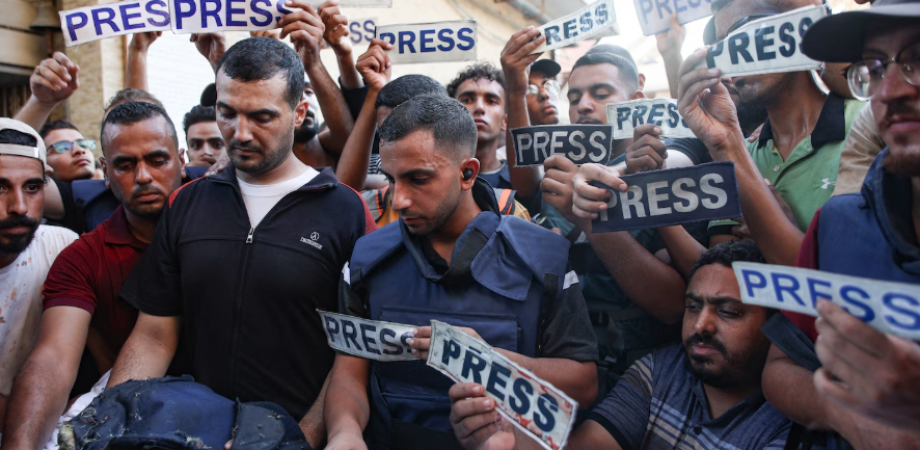
Throughout 2025, the work of reporting life in Gaza came at an unbearable cost. Dozens of media workers lost their lives while documenting daily realities, pushing the cumulative toll since the onset of the genocidal war into the hundreds. Others remain unaccounted for, their fate unknown, while many more carry lasting injuries from attacks that struck as they carried out their professional duties.
The year also saw a surge in detentions. Journalists were taken as prisoners, subjected to abuse and prolonged captivity, in circumstances that defy the basic protections guaranteed under international law. Alongside physical harm, newsrooms and media infrastructure faced sustained pressure, creating an environment where simply holding a camera or notebook became an act of grave personal risk.
Yet reporting did not stop. Despite killings, injuries and imprisonment, journalists continued to document events with persistence and resolve, ensuring that stories from Gaza reached beyond imposed blackouts. Their work challenged official narratives, exposed violations linked to the genocidal war, and preserved a record of events that might otherwise have been erased.
As the year drew to a close, a long-standing day of remembrance for journalists took on heavier meaning. It unfolded against the backdrop of two consecutive years of genocidal war, marked by what many describe as an intentional effort to silence independent reporting. In these conditions, journalism became not only a profession, but a form of resistance, maintaining the flow of information when truth itself was under threat.
Source : Safa News


