
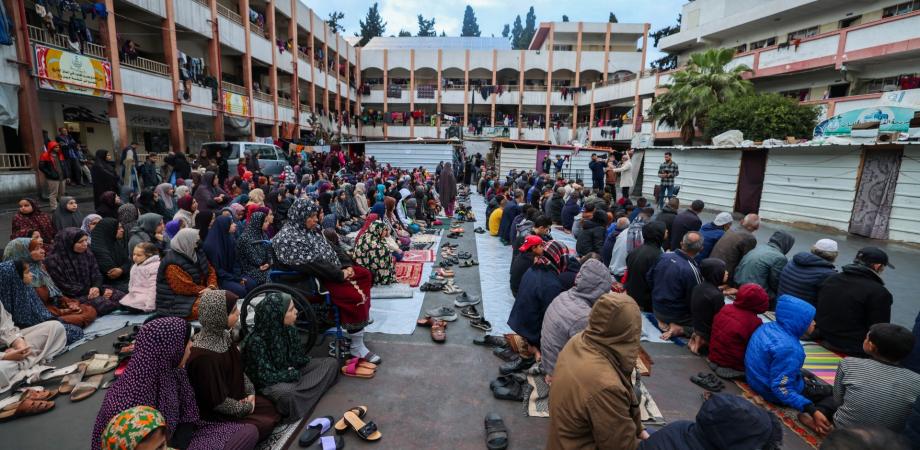
On the morning of Eid al-Fitr, children across Gaza once stepped out in new clothes, pockets ready to be filled with small notes handed out by relatives. This year, however, the ritual has taken on a markedly different character. In many households, the customary cash gift has been replaced by modest tokens, a sweet, a biscuit, or a low-cost toy, as liquidity has all but vanished amid the ongoing genocidal war and deepening financial paralysis.
Parents now find themselves improvising, striving to preserve a sense of occasion despite severe economic constraints. Bashir Ayad, a father in Gaza City, describes how he once distributed small sums to his children, allowing them the freedom to choose their own treats. Today, with cash virtually unobtainable, he offers each child a piece of chocolate instead, a symbolic gesture that underscores both the scarcity and the determination to maintain tradition. Similarly, displaced families living in makeshift shelters have adapted, assembling small bags of sweets in place of money, hoping to ensure that younger generations still recognise the significance of the day.
For children, expectations have quietly shifted. Nine-year-old Yousef speaks of past Eids spent collecting money from relatives before heading out with friends, a routine now replaced by promises of a single toy. His younger sister expresses no interest in money at all, asking only for chocolate, a reflection of how quickly norms have adjusted under prolonged hardship. What was once a celebration tied to small financial independence has become centred on whatever simple joys families can still provide.
Behind these changes lies a severe and unprecedented liquidity crisis. Since 2023, Gaza’s financial system has been pushed to the brink by the genocidal war, with bank branches destroyed or shuttered and cash supplies effectively frozen. Residents often retain funds in their accounts but are unable to access them, as withdrawals are heavily restricted and functioning cash machines are scarce. The result is a near-total breakdown in monetary circulation, where physical currency has become both rare and increasingly degraded through repeated use.
The deterioration is visible even in the condition of banknotes, many of which are worn to the point of disintegration. Traders now scrutinise bills carefully before accepting them, while informal market stalls have emerged offering to repair damaged currency, a striking illustration of an economy forced into improvisation. For those attempting to retrieve their savings, long waits and steep commissions at exchange points have become routine.
What emerges is not merely a financial disruption, but a broader reshaping of daily life. The ability to purchase essentials, travel, or observe social customs has been fundamentally altered. This Eid al-Fitr, the transformation of Eidiya from cash to confectionery encapsulates a wider reality: traditions endure, but in diminished and adapted forms. Even so, families continue to create moments of celebration where they can, a quiet insistence on normalcy, sustained by the smallest of offerings.
Source : Safa News


