
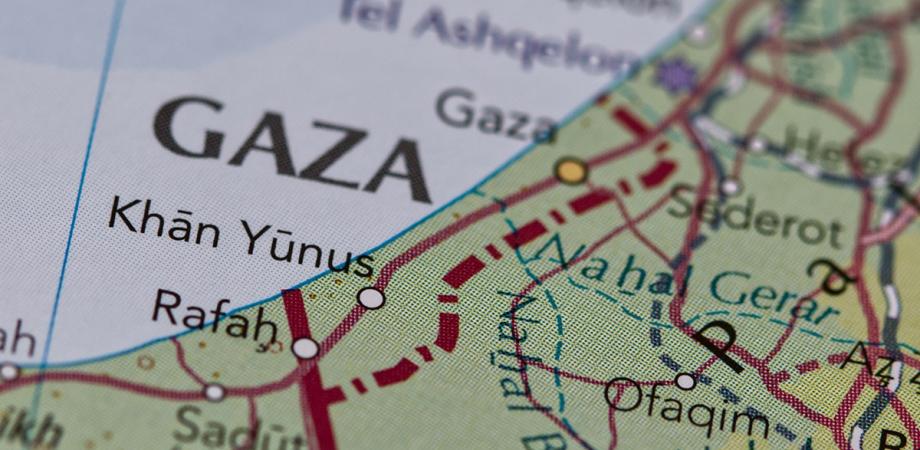
Across the Middle East, a pattern is emerging that suggests more than a succession of isolated confrontations. What is taking shape appears instead as a deliberate and evolving doctrine grounded in the application of overwhelming force, where destruction itself becomes a mechanism of strategic communication. Recent developments indicate that the methods tested in Gaza are no longer confined to a single territory, but are increasingly reflected in neighbouring theatres, reinforcing a regional dynamic defined by deterrence through devastation.
This approach is not without precedent. Its roots can be traced through earlier historical ruptures and military campaigns, yet the present phase signals a marked intensification. Civilian infrastructure, public services, and the broader fabric of daily life have come under sustained pressure, indicating a shift in operational thresholds. The cumulative effect has been to recalibrate international perception: what once provoked widespread alarm is now, by comparison, treated with relative restraint. In this recalibrated landscape, each new front is measured against the scale of destruction already witnessed, rather than against established legal or moral baselines.
At the centre of this doctrine lies a stark calculation: that any form of resistance must be met with consequences so severe as to deter future challenges. This logic extends beyond immediate military objectives, seeking instead to reshape the strategic environment of the entire region. It reflects a transition from policies aimed at managing tensions to those pursuing decisive and often irreversible outcomes. Internal political pressures appear to play a role in sustaining this trajectory, as more uncompromising positions gain traction despite their broader implications.
The regional implications are considerable. There is growing concern that the model applied in Gaza may be replicated elsewhere, with densely populated areas facing the prospect of large-scale destruction. In places such as southern Lebanon, fears persist that entire cities could be subjected to similar patterns, fundamentally altering both their physical landscape and social composition. Such developments point not only to immediate military objectives, but to longer-term ambitions tied to influence, territorial dynamics, and the reordering of geopolitical realities.
Ultimately, the situation cannot be reduced to questions of security alone. It is entangled with deeper historical narratives and ideological currents that continue to shape policy and perception alike. The unfolding trajectory suggests a broader contest over space, identity, and power, one in which the costs are borne most heavily by civilian populations, and where the boundaries of acceptable conduct continue to shift under the weight of precedent.
Source : Safa News


