
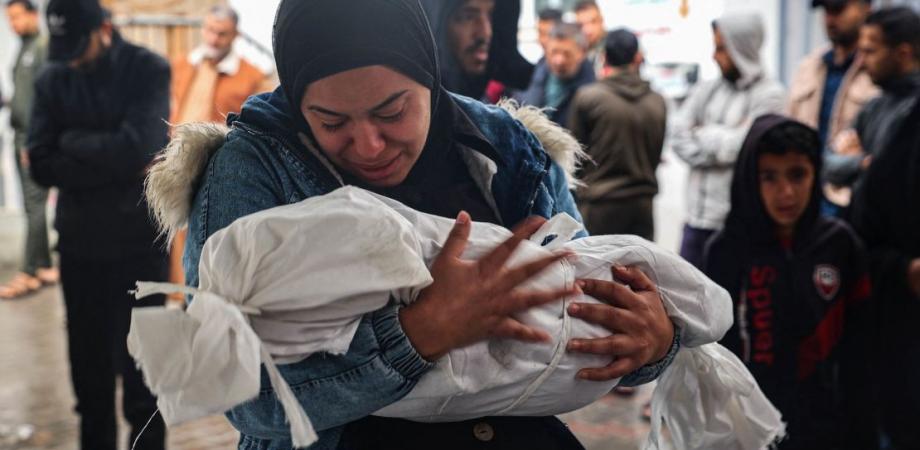
For Najwa Abu Atiwi, a resident of Nuseirat refugee camp in central Gaza, one moment of bombardment redrew the course of her life entirely. What began as an ordinary day ended in devastation, leaving her pulled from the ruins of her home and mistakenly believed to be dead. She regained consciousness after being wrapped for burial, only to discover that she had lost an eye and suffered severe facial injuries. The deeper wound, however, was the loss of her young daughter, Hajar, whose absence now defines the silence in her daily life.
Before the genocidal war intensified, Najwa’s life revolved around her children and her work at a small beauty salon. That world disappeared in an instant when her home was struck, killing several members of her family. Rescued from beneath the rubble, she was transferred to hospital in critical condition, where doctors initially doubted she would survive. The injuries she sustained have left her struggling to eat, dependent at times on medical support, and physically transformed in ways that have made even familiar routines difficult to reclaim.
Yet the most painful encounters have been within her own family. Her children, still very young, initially failed to recognise her. The shock of their reaction, confusion, fear, and silence, has lingered, shaping her emotional recovery as much as her physical one. She now reassures them by showing photographs from before her injuries, trying to bridge the gap between memory and reality. Their questions, often simple and direct, carry a weight that words can scarcely answer.
Psychological trauma has followed closely behind the physical damage. Najwa describes a shift from an outgoing, sociable life to one marked by withdrawal and anxiety. Treatment and medication have become part of her routine, yet she continues to draw strength from her children, whose presence offers moments of stability amid uncertainty. Despite everything, she speaks of trying to rebuild, of one day returning to work and facing her reflection with less fear.
Her daughter Hajar remains at the centre of her thoughts. Small, unfulfilled wishes now carry immense meaning, and acts of quiet remembrance have become a way to cope with loss. Surrounded by the support of her husband and family, Najwa continues to endure, holding onto a single hope: the chance to leave Gaza for medical care and to recover, even partially, the life that was taken from her.
Source : Safa News


