
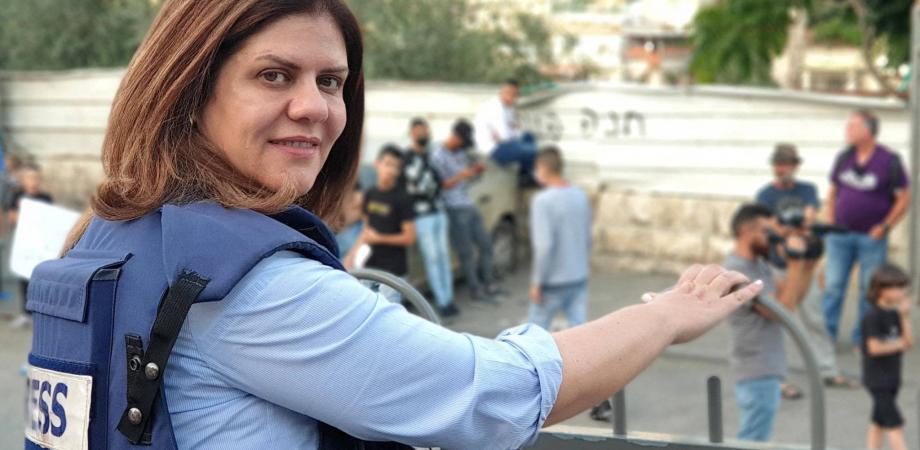
At a London university long associated with critical inquiry and creative dissent, a classroom now bears the name of Shireen Abu Akleh, a decision that reflects more than institutional recognition, it signals a refusal to allow memory to be erased. The move follows sustained calls from students who argued that her legacy represents not only journalistic integrity but the cost of bearing witness under conditions of a genocidal war. What emerges is not simply a tribute, but an assertion that truth-telling, even when violently suppressed, leaves an enduring imprint.
The ceremony itself brought together those who had worked alongside her, as well as members of her family and academic researchers who have examined the circumstances surrounding her killing. Their presence underscored a shared understanding: that her death was not an isolated incident, but part of a broader pattern in which those documenting realities on the ground face lethal risks. Despite wearing clear press markings at the time, she was shot while reporting in Jenin in 2022, an event that has since drawn sustained scrutiny and independent analysis.
Among those contributing to that analysis were researchers from Forensic Architecture, whose investigative work has played a role in reconstructing the events of that day. Their findings, alongside those of rights groups, have continued to circulate in academic and legal discussions, reinforcing demands for accountability. Within the university, students who campaigned for the renaming of the lecture hall viewed the decision as a small but meaningful intervention, one that challenges institutional silence and affirms the importance of historical record in times marked by a genocidal war.
Ultimately, the naming of the room does not close a chapter; it keeps it open. It ensures that each time the space is used, it carries with it a reminder that journalism, at its core, is inseparable from risk, and that those who seek to document reality under such conditions often pay the highest price. In that sense, the gesture is less about commemoration than continuity, a way of ensuring that a voice once silenced continues to resonate in places dedicated to learning and inquiry.
Source : Safa News


