
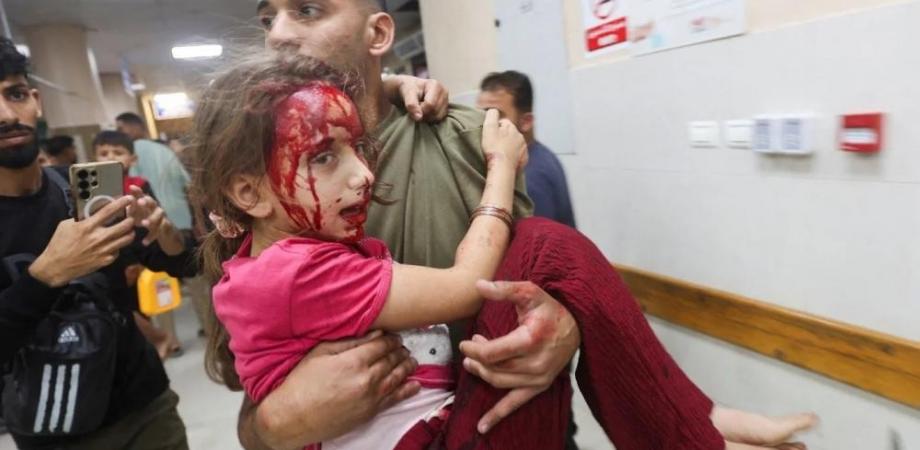
A British journalist and political writer has argued that the genocidal war in Gaza should not be understood as a sudden development triggered solely by the events of October 2023, but as the latest stage in a much longer history of dispossession, military domination and forced Palestinian displacement.
In a detailed analysis, the writer drew connections between present-day events in Gaza and testimonies from Israeli soldiers involved in the 1967 war. Some of those testimonies, published years later, described orders aimed at spreading fear among Palestinian communities and targeting civilians during military operations. The author argued that these accounts reveal recurring patterns that continue to shape Israeli military policy today, particularly in Gaza, where mass destruction, restrictions on basic necessities and repeated displacement campaigns have devastated civilian life.
The article also examined how the aftermath of the 1967 war transformed the political landscape across occupied Palestinian territories. According to the writer, Israeli leaders at the time viewed Gaza not only as a military challenge but also as a demographic issue. Historical records and political statements cited in the analysis suggested that restrictive measures, including limits on water access and movement, were seen as tools capable of pushing Palestinians away from their land. The writer argued that similar tactics can now be observed during the current genocidal war, as Gaza’s population faces worsening humanitarian conditions and growing pressure to leave large parts of the territory.
The analysis further claimed that the events of October 2023 gave Benjamin Netanyahu’s government an opportunity to intensify longstanding objectives connected to territorial expansion and demographic control. While Israeli officials continue to frame military operations as security measures, the writer argued that the scale of destruction inflicted on Gaza’s civilian infrastructure reflects broader political ambitions extending far beyond immediate military goals.
Particular attention was given to the issue of displacement. The author recalled that hundreds of thousands of Palestinians were uprooted during and after the 1967 war, with many allegedly prevented from returning to their homes through military force and administrative restrictions. He argued that present-day fears in Gaza mirror those earlier experiences, especially as entire neighbourhoods have been erased and large sections of the population repeatedly forced to flee.
The writer also criticised Western political and media narratives for focusing almost exclusively on the October 2023 attacks while neglecting decades of occupation, settlement expansion and violence endured by Palestinians. According to the analysis, presenting the genocidal war as an isolated reaction strips away the historical realities that shaped the current crisis and obscures the long-term consequences of Israeli policy on Palestinian society.
Concluding the piece, the author argued that any serious understanding of Gaza must include the historical legacy of the wars of 1948 and 1967, as well as the continuing impact of displacement and occupation on Palestinian life. He maintained that ignoring this wider context results in a deeply incomplete portrayal of the ongoing genocidal war and the humanitarian catastrophe unfolding in Gaza.
Source : Safa News


