
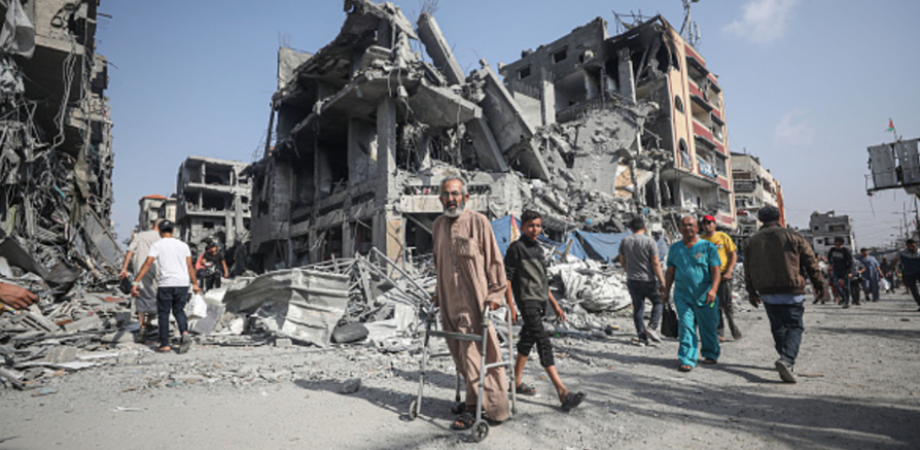
SAFA – Economic experts say Gaza's reconstruction must be based on a comprehensive, long-term strategy rather than temporary projects or piecemeal solutions that fail to address the root causes of the crisis.
Speaking to Felesteen newspaper, they said reconstruction efforts must not create a new geographic or humanitarian reality in the Gaza Strip but instead should be guided by a vision that restores normal life.
The experts stressed that reconstruction cannot begin without an end to the Israeli offensive, the withdrawal of Israeli occupation forces, and the reopening of border crossings to allow the entry of essential supplies, particularly construction materials.
They also emphasized the need to guarantee residents' right to return to their original communities and rebuild cities and towns in a way that preserves Gaza's social and economic fabric.
They added that reconstruction should be carried out through a unified Palestinian national framework that safeguards Palestinian rights and sovereignty while promoting sustainable development across the Strip.
Need for a Comprehensive Plan
Economic expert Dr. Walid Al-Jadi said reconstruction must extend beyond humanitarian assistance and engineering projects, arguing that the real challenge lies in establishing a clear institutional framework that ensures efficiency, transparency, and accountability.
He called for an international conference bringing together all relevant parties to develop a detailed reconstruction plan with clear priorities, oversight mechanisms, and measurable benchmarks. Such a plan, he said, would help translate financial pledges into projects on the ground rather than leaving them as unfulfilled promises.
Al-Jadi also stressed the need for an economic strategy that strengthens local production and creates employment instead of relying solely on humanitarian aid. Without such a strategy, he warned, Gaza could face the same economic crisis even after reconstruction is completed.
He criticized the slow international response and weak coordination among stakeholders, saying both continue to delay recovery efforts and widen the gap between humanitarian needs and actual progress.
Al-Jadi added that any signs of economic recovery will remain limited without concrete action, noting that Gaza continues to suffer extensive damage across all major sectors.
He estimated reconstruction costs at more than $50 billion, with over 70% of buildings and infrastructure damaged. Hundreds of thousands of homes have been destroyed, while healthcare, education, water, and other essential services remain severely disrupted.
He added that clearing debris and restoring infrastructure could take years, making a comprehensive strategy that combines immediate rebuilding with long-term development essential to creating a more resilient economy.
Experts Reject Temporary Solutions
Economic expert Mohammed Abu Jayab said any attempt to replace a comprehensive reconstruction plan with pilot projects or isolated temporary housing under special security arrangements is unlikely to succeed.
He said Gaza's crisis extends far beyond a temporary housing shortage, describing it as a large-scale humanitarian and developmental catastrophe affecting entire cities, infrastructure, and the homes of hundreds of thousands of residents.
Abu Jayab argued that replacing comprehensive reconstruction with temporary housing or partial solutions would likely face broad social, economic, and legal opposition.
He stressed that reconstruction must begin with a complete end to the war, the lifting of the blockade, and the reopening of border crossings to allow construction materials and equipment into Gaza. This should be followed by a comprehensive rebuilding program that guarantees residents' return to their original communities, protects private property rights, and reconstructs cities and neighborhoods according to the needs of the population rather than temporary arrangements.
He also said reconstruction must be based on justice, transparency, and respect for residents' rights while allowing Palestinians in Gaza to play a central role in shaping the future of their communities.
Abu Jayab concluded that rebuilding Gaza is not merely an engineering or humanitarian project but a fundamental right tied to adequate housing, the restoration of normal life, and the protection of residents' social fabric and legal rights.
He said the priority is not temporary alternatives but securing the political will and financial resources needed to launch a comprehensive, sustainable reconstruction process that restores life to Gaza and preserves the dignity of its people.
Source : Safa News


