
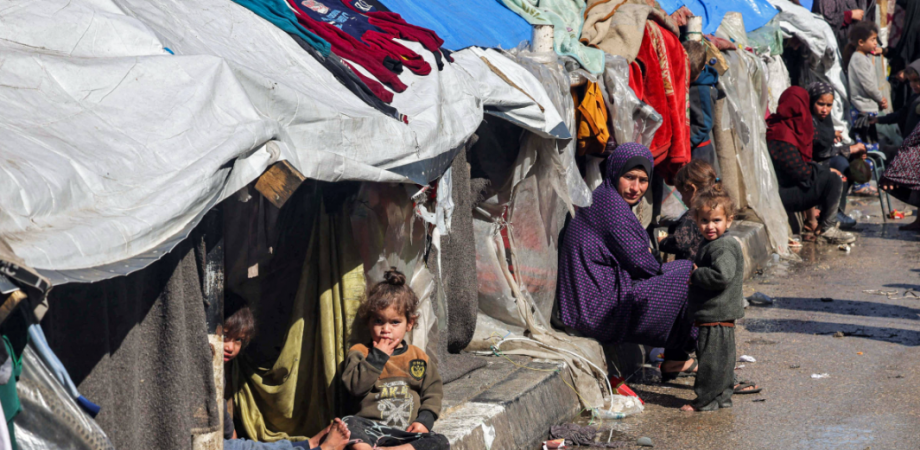
SAFA- Amid the ongoing genocide on the Gaza Strip and its severe economic consequences, calls are growing for a new approach to humanitarian relief and economic recovery and to move beyond traditional aid limited to food parcels and toward flexible programs that combine in-kind assistance with direct cash support for families and workers who have lost all sources of income.
In assessing Gaza’s markets and purchasing power, economic expert Mohammad Skeik and Sami Al-Amasi, Head of the Palestinian General Federation of Trade Unions, share the view that the shortage of cash liquidity and the destruction of local businesses have pushed most of Gaza’s population into extreme poverty. They stress that the situation requires international intervention that ensures sustainable support and fair distribution.
An Urgent Need
Speaking to Felesteen newspaper, Skeik said that families in Gaza urgently need a dual-track assistance system. The first track focuses on providing essential in-kind aid, including food, beverages, clothing, personal hygiene items, and sanitation supplies, to ensure a minimum level of food and health security.
The second track involves providing direct cash assistance, allowing households the flexibility to purchase essential items not included in relief packages, such as medicines, children’s needs, transportation costs, and other services.
Skeik stressed that combining in-kind and cash assistance is no longer an option but an urgent need as the crisis continues, incomes disappear, and local production remains at a standstill due to the widespread destruction of economic facilities.
He explained that these conditions have almost completely paralyzed economic activity. Purchasing power has fallen to unprecedented levels, leaving markets stagnant despite the availability of some goods.
He added that injecting cash into the economy would help revive economic activity, even on a limited scale, by increasing domestic demand and supporting small businesses, creating a modest economic cycle that strengthens community resilience.
Skeik also emphasized the need for a fair and transparent distribution system to ensure aid reaches those most in need.
He called for building on successful models implemented by international organizations such as the World Food Programme (WFP) and Oxfam, which have helped provide relative stability for beneficiary families. He urged expanding these programs to reach a larger number of affected households.
Source : Safa News


