
SAFA - The future of the Gaza ceasefire agreement has once again come into focus after the Palestinian negotiating delegation confirmed its approval of the mediators’ proposal to proceed with the remaining phases of the agreement.
The move came as the Trump peace team announced a roadmap for the transition to the second phase, which includes a gradual Israeli withdrawal, deployment of the National Committee to administer the Gaza Strip, and a set of security arrangements.
Despite the ongoing political and diplomatic momentum, a fundamental question remains: Is Israel willing to implement the ceasefire agreement amid internal political complexities, diverging international positions, and the continuation of Israeli offensive operations on the ground?
The Trump peace team recently unveiled a roadmap that sets a two-week timeline for launching the second phase of the agreement following the approval of all parties.
The plan includes the deployment of the National Committee to administer the Gaza Strip, the transfer of police weapons to the committee, and Israel’s commitment to halt its military operations. Meanwhile, the Islamic Resistance Movement (Hamas) announced its approval of the mediators’ proposal to proceed with the remaining phases of the agreement.
Real Pressure
Ali Al-A’war, professor of regional and international conflict resolution and an expert on Israeli affairs, said Hamas’s approval of the draft agreement, including provisions for placing heavy weapons under Palestinian control, represents an unprecedented political step aimed at protecting Palestinians, facilitating reconstruction, and restoring normal life in the Gaza Strip.
Speaking to Felesteen newspaper, Al-A’war said the real challenge does not lie in the Palestinian position but rather in the willingness of the Israeli government to fulfill its obligations.
He noted that the success of the agreement depends largely on the ability of the U.S. administration and President Donald Trump to exert genuine pressure on Israeli Prime Minister Benjamin Netanyahu to carry out the withdrawal alongside the implementation of the remaining provisions of the agreement.
He added that Israel’s domestic political calculations remain the biggest obstacle to implementing the agreement. Netanyahu, he explained, is facing crucial elections, making him reluctant to take any step that could be portrayed by his political rivals, particularly right-wing and far-right parties, as a concession to the Palestinians.
Al-A’war added that current indicators do not suggest any genuine Israeli intention to implement the agreement, whether by allowing the deployment of international monitoring forces or the National Committee to administer the Gaza Strip. He argued that the continued rhetoric of Israeli political leaders demonstrates that the current government remains committed to a military approach.
He added that the electoral competition within Israel and the rivalry between right-wing and far-right parties over settlement and security issues make any withdrawal from Gaza before the elections extremely difficult.
He noted that any significant shift is likely to depend on changes in Israel’s political landscape after the elections.
Real Guarantees
For his part, writer and political analyst Sami Al-Sha’er said that Israel’s commitment to completing the ceasefire agreement depends not only on the course of the negotiations but is also shaped by complex political, regional, and international considerations, foremost among them the positions of the United States and European countries toward the Israeli government.
Speaking to Felesteen newspaper, Al-Sha’er said that many Western countries are attempting to balance their support for de-escalation efforts with the need to safeguard their strategic interests and political ties with the Israeli occupation forces. As a result, the pressure exerted on the Israeli government remains insufficient to compel it to implement all phases of the agreement according to the announced timeline.
He added that this situation leaves Palestinians without genuine guarantees to ensure the continuation of the ceasefire or a smooth transition to the second phase, particularly in light of previous experiences in which the implementation of agreements repeatedly stalled.
Al-Sha’er also noted that the future of the agreement remains closely tied to regional developments. He explained that any escalation between the United States and Iran could divert international attention away from Gaza, while a reduction in regional tensions would create greater room for continued diplomatic efforts.
He pointed out that contacts among the mediators have continued uninterrupted in recent weeks and that political engagement has remained active. However, the easing of regional tensions has given fresh momentum to negotiations aimed at reviving the second phase of the agreement.
Regarding the possible scenarios, Al-Sha’er said that the Israeli forces may resort to slowing the implementation of their commitments, thereby prolonging the current political deadlock and increasing the likelihood of renewed military escalation or new military operations, without causing a complete collapse of the negotiations.
At the same time, he expected U.S. and international pressure on Israel to continue, particularly after the agreement came to be viewed by the U.S. administration as a political achievement.
He stressed that the most likely scenario is the continued implementation of the agreement, yet gradually and at a slow pace due to political complexities and the ongoing disagreements among the parties.
Key Obstacles
Meanwhile, writer and researcher on Israeli affairs Ismail Musallamani said that the prospects for the agreement’s success still exist but remain limited, depending largely on the ability of the mediators to provide guarantees and effective monitoring mechanisms to ensure that both sides fulfill their commitments.
Speaking to Felesteen newspaper, Musallamani said that the Israeli forces are seeking to use the negotiations to secure political and security gains, whether by improving their negotiating position or by completing some of their military objectives, while at the same time avoiding being blamed by the international community for the collapse of the talks.
He added that Egypt and Qatar continue to serve as the principal mediators, while the United States remains the most influential party over Israeli decision-making. He noted that the chances of the agreement succeeding increase whenever clear guarantees and effective international monitoring mechanisms are in place.
Musallamani explained that any renewed military escalation or further violations could jeopardize the agreement. Conversely, maintaining calm, ensuring the steady flow of humanitarian aid, and improving living conditions would enhance the prospects of moving to the second phase and pave the way for reconstruction and the restoration of normal life.
He stressed that the humanitarian situation in Gaza is a critical factor in the future of the agreement. Delays in the delivery of humanitarian assistance and the continued suffering of civilians, he said, further complicate the situation and undermine efforts to sustain the ceasefire.
Musallamani concluded that the most likely scenario is the continuation of negotiations while maintaining a fragile truce, as all parties seek to strengthen their political positions before fully moving to the next phase.
The future of the agreement, he said, ultimately depends on political and field developments, as well as Israel’s commitment to implementing what has been agreed upon.
On Friday, the Islamic Resistance Movement (Hamas) said that it and the Palestinian factions had engaged responsibly and positively with the negotiation process and the mediators’ proposals to complete the implementation of the second phase of the Gaza ceasefire agreement, stressing that Israel must fulfill its obligations.
In a statement, Hamas emphasized that Israel’s commitment to ending its military offensive is the essential prerequisite for establishing the timetable for implementing the agreed arrangements. It added that the second phase of the agreement depends on Israel’s full compliance with the provisions of the first phase.
The body known as the Peace Council also announced the provisions of a roadmap for completing the implementation of the Gaza ceasefire agreement.
The roadmap calls for Israel to fully implement all of its obligations under the Sharm El-Sheikh Protocol without delay and for the parties to finalize the implementation timetable and mechanisms within 14 days of approving the roadmap.
Once the timetable is completed, the National Committee will enter the Gaza Strip and begin assuming its responsibilities. According to the council, the transition from one phase to the next will be conditional upon verification that the previous phase has been fully implemented.
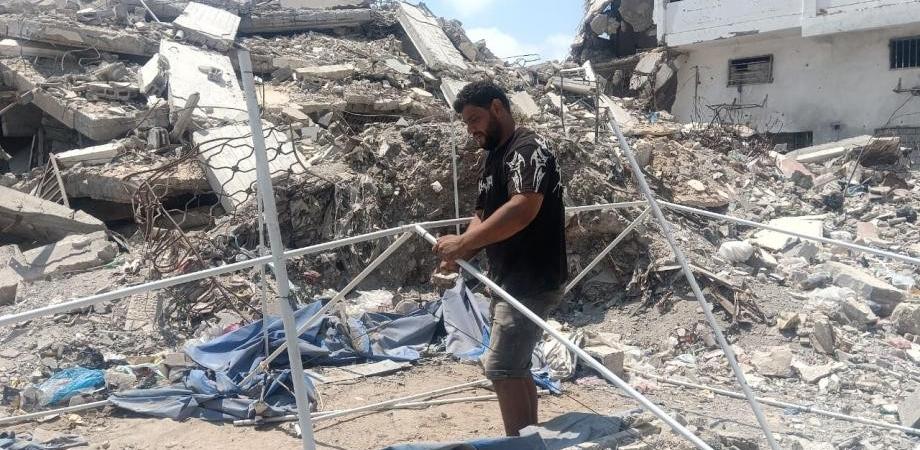
Although a ceasefire agreement has been in effect since October 2025, Israel has continued to violate its terms, resulting in the deaths and injuries of hundreds of Palestinians, the destruction of additional homes, the burning of tents sheltering displaced families, the expansion of the so-called “Yellow Line” through military force, and continued restrictions on the entry of humanitarian aid and the travel of patients.
The people of the Gaza Strip continue to endure unprecedented humanitarian conditions. Hundreds of thousands of Palestinians are living in tents and temporary shelters after their homes were destroyed or severely damaged.
The prolonged genocide has devastated most of the territory’s infrastructure and resulted in tens of thousands of deaths and injuries, making any progress in implementing the ceasefire agreement a vital source of hope for Gaza’s population.
Source : Safa News


