
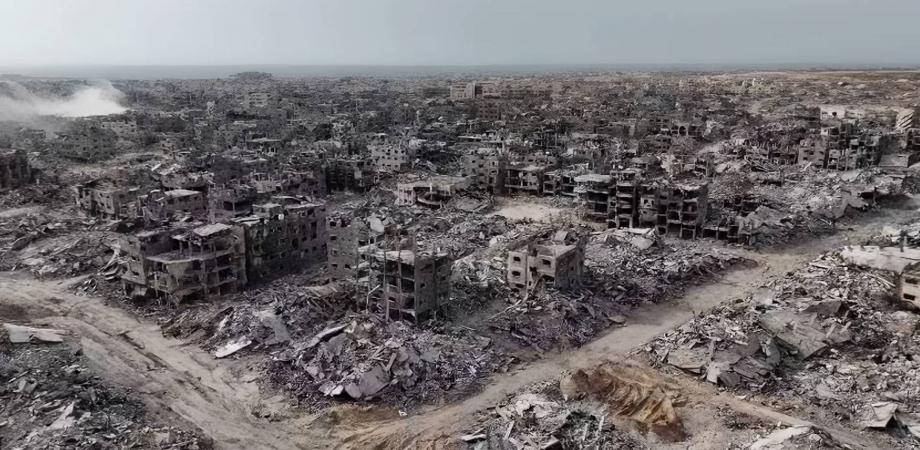
SAFA — A new illustrated book published by Harvard University Press places the Palestinian experience alongside nine other cases of genocide, tracing what its author describes as a historical process of dispossession and dehumanization from the Nakba to Israel’s war on Gaza.
The Book of Genocides, by Armenian-American writer, artist and anthropologist Dana Mashoian Walrath, examines ten genocides across five centuries through a combination of historical research, anthropology and visual storytelling.
One chapter is devoted specifically to what the book calls “The Palestinian Genocide,” placing Palestine alongside the Armenian genocide, the Holocaust, the Cambodian genocide, the genocide against the Tutsi in Rwanda, the Bosnian genocide and the persecution of the Rohingya, among other cases.
Walrath draws on the work of Raphael Lemkin, the Polish-Jewish lawyer who coined the term “genocide,” to examine how dehumanization, dispossession and the destruction of communities can operate as components of genocidal processes.
From the Nakba to Gaza
In the Palestine chapter, Walrath places Israel’s current war on Gaza within a longer history of Palestinian dispossession, beginning before the establishment of Israel and examining the 1948 Nakba, when hundreds of thousands of Palestinians were expelled or fled their homes.
She connects that history with what Palestinians are experiencing in Gaza today, examining starvation, the destruction of homes, attacks on healthcare and the killing of children and journalists as part of the broader framework through which she analyses genocide.
In an interview with The Guardian, Walrath said the project originally included Palestine alongside several other conflicts in a broader section examining the boundaries of genocide. Israel’s assault on Gaza after October 7, 2023, led her to restructure the work and devote an entire chapter to Palestine.
Walrath told the newspaper that she wanted to name what is happening to Palestinians as genocide and said she views the process as extending back to 1948.
“I have no doubt this is a systematic attempt to eliminate a people,” she said.
The book’s inclusion of Palestine is particularly notable because it does not treat Gaza solely as a contemporary war. Instead, Walrath examines the current destruction through a historical framework of displacement, land seizure and dehumanization.
Ten Genocides Across Five Centuries
Beyond Palestine, The Book of Genocides examines atrocities against the Indigenous peoples of the Americas, Black Americans, Aboriginal Australians and Torres Strait Islander peoples, Armenians, European Jews during the Holocaust, Cambodians, the Tutsi in Rwanda, Bosnians and the Rohingya.
Walrath, whose grandparents survived the Armenian genocide, combines historical research with experiences gathered through travel, interviews and engagement with communities affected by mass atrocities.
Rather than relying primarily on graphic depictions of killing, she uses symbolic artwork to explore dehumanization. Portraits in the book are divided into sections that readers can recombine into distorted forms, visually representing the process through which targeted populations are stripped of their humanity.
The book ultimately argues that genocide cannot be understood only through mass killing. Walrath examines the political, cultural and intellectual systems that enable groups to be dehumanized, displaced and destroyed.
By devoting an entire chapter to “The Palestinian Genocide,” The Book of Genocides places Palestine within a global historical examination of genocide while presenting the destruction of Gaza not as an isolated episode, but as part of a much longer Palestinian history of dispossession and displacement.
Source : Safa News