
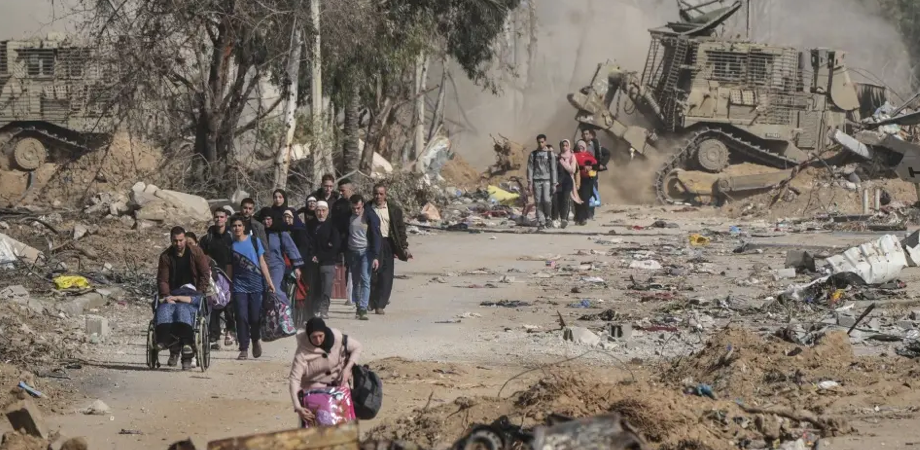
SAFA — Gaza is becoming increasingly uninhabitable as Israel's genocidal campaign, continued attacks, and restrictions on essential supplies have devastated living conditions for Palestinians, a senior official with the UN agency for Palestinian refugees (UNRWA) warned.
Akihiro Seita, UNRWA's director of health, told Jiji Press that Gaza is “becoming an increasingly unlivable place for humans,” despite the ceasefire agreement that took effect on October 10, 2025.
“Residents' living environment has fallen apart,” Seita said, describing the collapse of basic living conditions across the Gaza Strip.
Although large-scale Israeli bombardment has decreased since the ceasefire, Israeli forces have continued carrying out attacks and maintaining control over extensive areas of Gaza.
Israeli forces are estimated to control approximately 70 percent of the territory, leaving around two million Palestinians crowded into the remaining 30 percent, most of them living in tents after repeated displacement.
The overcrowding has intensified the humanitarian crisis, while Israeli restrictions on the entry of medical supplies have left Gaza's healthcare system struggling to meet basic needs.
Seita warned that poor sanitation and shortages of essential supplies have contributed to outbreaks of skin diseases and other infectious illnesses, even as large-scale fighting has decreased.
Malnutrition Continues to Harm Palestinian Children
Seita also warned that hunger remains a serious threat to Palestinians despite the distribution of some food rations since the ceasefire.
He said impoverished families continue to struggle to obtain sufficient food, while children who suffered malnutrition during the famine in Gaza City in August 2025 are still experiencing its consequences.
A follow-up survey conducted by UNRWA found that some infants affected by malnutrition showed developmental delays, including difficulties with walking and speaking.
“Even though combat has decreased, the children's plight continues,” Seita said.
Palestinians Fear Being Forgotten
Seita also expressed concern that international attention has shifted away from Gaza following the US-Israeli attacks on Iran that began in late February 2026.
He said Palestinians fear that their suffering is being overlooked as they continue to face displacement, shortages of essential supplies, and the destruction of their homes and infrastructure.
Gaza's residents are “worried that no one is willing to help them,” he said.
Nearly a year after the ceasefire took effect, Palestinian families remain crowded into displacement camps, with access to healthcare, adequate food, and safe shelter severely restricted.
Source : Safa News


