
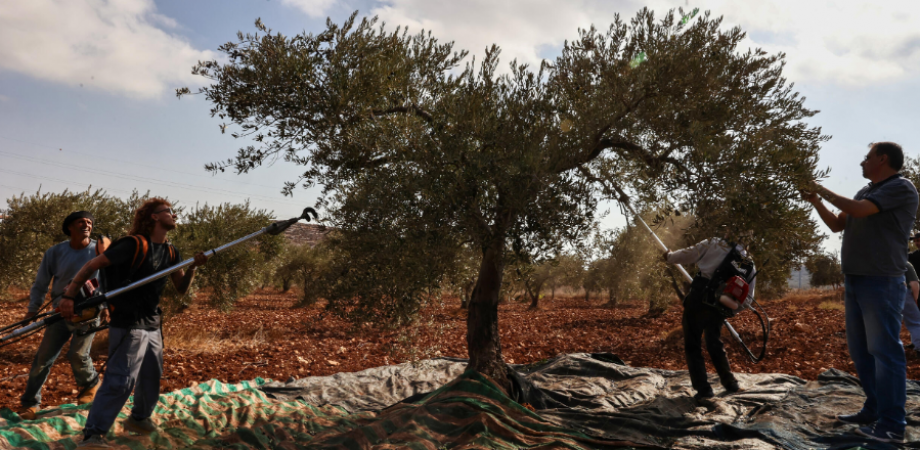
SAFA — Israeli forces and settlers carried out 409 attacks against Palestinian olive farmers, agricultural land, trees, and equipment in the occupied West Bank between October 1 and 21, according to figures released Thursday by the Colonization and Wall Resistance Commission, exposing the scale of violence and restrictions facing Palestinian families during one of the most important agricultural seasons of the year.
The commission documented 317 attacks by Israeli settlers and 92 by Israeli forces, including physical assaults on farmers, shootings, intimidation, restrictions on access to agricultural land, theft of harvested olives, destruction of trees, and confiscation of equipment. These attacks have disrupted the annual harvest and threatened the livelihoods of families who depend on olive cultivation for income and food security.
Nablus recorded the highest number of attacks, with 166 incidents, followed by Salfit with 91, Ramallah and al-Bireh with 69, Jenin with 36, Hebron with 30, Qalqilya with nine, Bethlehem with five, and Jerusalem with three.
Together, Nablus and Salfit accounted for approximately 63% of all documented attacks, making the two governorates the most heavily affected areas during the first three weeks of the harvest.
Farmers Face Shootings, Assaults, Arrests, and Restrictions
According to the commission, 287 attacks directly targeted Palestinian farmers, including 149 incidents of intimidation, 50 physical assaults, 29 cases involving movement restrictions or denial of access to agricultural land, 18 arrests during harvesting activities, and 15 incidents in which farmers were detained inside olive groves.
The commission also recorded 14 incidents involving pepper spray or grenades and 11 shootings, illustrating the dangers Palestinians face while attempting to harvest crops from land they have cultivated for generations.
Among the most serious incidents was the killing of Ali Hassan Bazzari, from the village of Burqa, northwest of Nablus, who died on October 7 from wounds sustained when Israeli settlers shot him while he was harvesting olives.
On October 17, settlers operating under the protection of Israeli forces attacked Palestinian olive pickers in Ma'in, in Masafer Yatta, south of Hebron. One Palestinian was shot in the thigh, while two others suffered fainting and burns following exposure to pepper spray.
A day earlier, on October 16, three Palestinian farmers were injured in an attack in Asira al-Qibliya, south of Nablus, while two others were injured in Beita, another village that has experienced repeated settler attacks and confrontations over agricultural land.
The incidents demonstrate how the annual harvest has become increasingly dangerous for Palestinian families, many of whom must contend with armed settlers, military restrictions, and the possibility of detention or injury simply to reach their olive groves.
Olive Theft and Destruction Threaten Palestinian Livelihoods
Beyond direct attacks on farmers, the commission documented 122 incidents targeting olive trees, farmland, agricultural equipment, and other property, causing immediate economic losses and threatening future harvests.
These included 57 cases of olive theft, 23 incidents involving the seizure or theft of agricultural equipment, 12 cases of olive trees being broken, 11 incidents in which trees were cut down or uprooted, seven fires in olive-growing areas, five cases of tree damage, four incidents involving the burning of property, and three cases of land leveling.
The theft of harvested olives deprives farmers of the income they expect to earn after months of cultivating and maintaining their groves, while damage to trees and agricultural infrastructure can affect production for years.
In the town of Qabalan, south of Nablus, Israeli settlers attacked and overturned a Palestinian vehicle on October 16 before stealing bags of harvested olives.
In Rantis, northwest of Ramallah, Palestinian farmers were detained for more than two hours while Israeli forces confiscated two bags of olives and two olive-harvesting machines, preventing them from completing their work and removing essential equipment needed for the harvest.
Such incidents leave farmers facing multiple forms of loss at once, including stolen crops, damaged vehicles, confiscated tools, interrupted harvesting, and the continuing threat of violence when they attempt to return to their land.
For families whose income depends heavily on olive production, the consequences extend beyond a single day's work. Harvesting delays can reduce the amount of fruit collected, while the destruction or uprooting of mature olive trees threatens an agricultural resource that may take years to replace.
Attacks Threaten Palestinians’ Access to Their Land
The commission warned that the attacks are not limited to physical violence or property damage but also involve systematic restrictions that prevent Palestinians from reaching and cultivating their agricultural land.
Farmers have faced intimidation, detention, and military-imposed access restrictions during the harvest, leaving some unable to collect their crops despite having invested months of labor in maintaining their olive groves.
The commission emphasized that Palestinians have an established right to cultivate their land, harvest its produce, and transport their crops without intimidation or interference.
It called for effective measures to protect farmers throughout the olive harvest, ensure unrestricted access to agricultural land, and enable Palestinian families to remain in their fields and complete their work safely.
The commission also demanded an end to attacks by settlers and Israeli forces and accountability for those responsible, warning against the use of armed violence and coercive restrictions to force Palestinians away from their land.
A Harvest Season Under Attack
The olive harvest is both an essential source of livelihood and a deeply rooted part of Palestinian agricultural life, with generations of families depending on their groves for olive oil production, household consumption, and seasonal income.
The commission's figures show that during just 21 days, Palestinian farmers faced hundreds of incidents involving violence, theft, property destruction, and restrictions on their movement, with attacks concentrated in some of the West Bank's most important olive-growing areas.
The combination of physical assaults, stolen harvests, confiscated equipment, and damaged trees threatens not only this year's production but also the long-term ability of Palestinian families to maintain their agricultural livelihoods.
With the harvest season still underway, the commission renewed its call for immediate protection of Palestinian farmers and their land, stressing that the right to harvest olives must not be undermined by settler attacks, military restrictions, or the threat of forced displacement.
Source : Safa News


