
SAFA — Israeli settlers and occupation forces carried out 674 attacks against Palestinian farmers, olive harvesters, and agricultural land across the occupied West Bank in just 37 days, according to figures released by the Palestinian Colonization and Wall Resistance Commission.
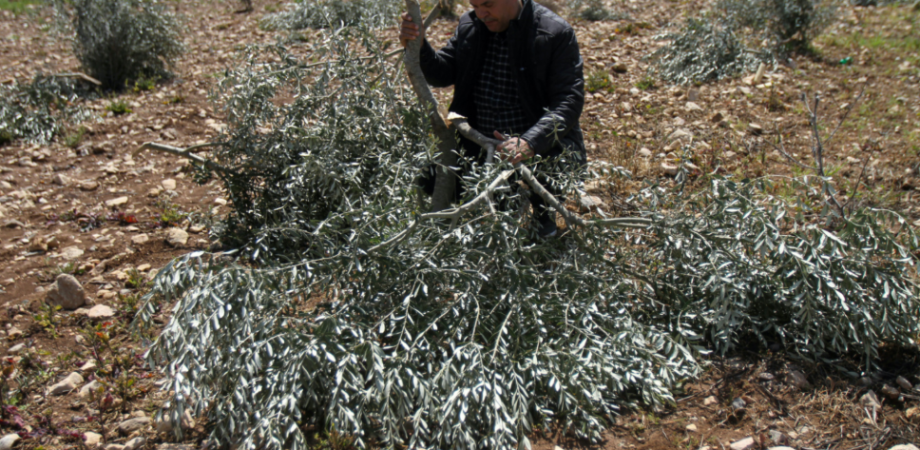
The attacks, documented between October 1 and November 6, 2026, included physical assaults, threats, restrictions on access to farmland, theft of olive crops, and the destruction of thousands of olive trees.
According to the commission, Israeli settlers were responsible for 520 of the recorded incidents, while Israeli forces carried out another 154.
The figures highlight the escalating threats facing Palestinian farming communities during the annual olive harvest, a critical source of income for thousands of families across the occupied West Bank.
Nablus, Ramallah, and Salfit Record Highest Number of Attacks
The commission reported that Nablus governorate recorded the highest number of incidents, with 230 attacks during the 37-day period.
Ramallah and Al-Bireh followed with 130 attacks, while Salfit recorded 129.
Together, the three governorates accounted for 489 incidents, representing approximately 72.6% of all attacks documented during the reporting period.
The commission also recorded 87 attacks in Hebron, 41 in Jenin, 30 in Bethlehem, 24 in Qalqilya, and three in occupied Jerusalem.
The geographical distribution shows that attacks affected agricultural communities across the West Bank, particularly in areas near Israeli settlements and settlement outposts.
Palestinian farmers have reported increasing difficulties reaching their olive groves, with some forced to seek prior coordination to access agricultural land while others have been prevented from harvesting altogether.
Farmers Assaulted, Threatened, and Denied Access to Their Land
According to the commission, the documented violations included 249 incidents of intimidation, 76 physical assaults, and 43 cases involving movement restrictions or the prevention of farmers from reaching their fields.
The commission also reported arrests and detentions on agricultural land, the use of live ammunition, tear gas, and pepper spray, and attacks affecting journalists and international solidarity activists accompanying Palestinian farmers.
One Palestinian was reportedly shot and killed by Israeli settlers while participating in the olive harvest.
The reported killing underscores the potentially deadly consequences of attacks on farming communities during the harvest season.
In several areas, farmers have been unable to reach their groves without prior coordination, while others have been denied access to their land.
Such restrictions can prevent families from collecting their crops at the appropriate time, leaving olives vulnerable to theft, damage, or loss.
For Palestinian households that depend on olive cultivation, even a single disrupted harvest can result in significant financial hardship.
Nearly 3,000 Olive Trees Damaged or Destroyed
The commission documented extensive damage to olive trees, agricultural equipment, and harvested crops.
Its figures included 91 incidents involving the theft of olive crops and 37 cases of agricultural equipment being stolen or confiscated.
Another 20 incidents involved the breaking of trees, while 18 involved cutting down or uprooting them.
The commission also recorded incidents of agricultural land and property being set on fire, along with the bulldozing of farmland.
In total, 2,974 olive trees were reported damaged during the 37-day period.
Olive trees are central to Palestinian agricultural life, providing income, food, and a connection to land cultivated by families over generations.
Because olive trees take years to mature, their destruction can undermine agricultural production long after the immediate harvest season has ended.
The loss of trees, crops, and farming equipment places additional financial pressure on rural communities already affected by restrictions on land access and settlement expansion.
Attacks Rise Sharply Compared With Previous Harvest Seasons
The commission's figures indicate a substantial increase in reported attacks compared with previous olive harvest seasons.
According to the data, 333 attacks were recorded in 2023, followed by 407 in 2024 and more than 441 in 2025.
The 674 incidents documented between October 1 and November 6, 2026, represent an increase of approximately 102% compared with the reported 2023 figure and 66% compared with 2024.
The 2026 total is particularly concerning because it covers only 37 days of the harvest season.
However, direct comparisons depend on whether the figures for previous years cover equivalent reporting periods and use the same criteria for documenting incidents.
Settlement Expansion and Restrictions Threaten Farming Communities
The Colonization and Wall Resistance Commission warned that the attacks are part of a broader pattern affecting Palestinian agricultural communities across the occupied West Bank.
According to the commission, the reported violations increasingly involve repeated restrictions on access to farmland, settler incursions into agricultural areas, the release of livestock into cultivated fields, theft of harvested olives, and the establishment or expansion of settlement outposts.
The commission has linked these practices to growing pressure on Palestinian farmers and their ability to maintain their livelihoods.
For many rural families, access to olive groves is essential not only for seasonal income but also for maintaining their connection to land cultivated across generations.
The continued attacks, destruction of trees, and restrictions on agricultural access threaten the long-term viability of Palestinian farming communities.
As the olive harvest continues, the commission's figures point to an increasingly dangerous environment for Palestinians seeking to work their land, with hundreds of attacks recorded in little more than a month.
Source : Safa News


