
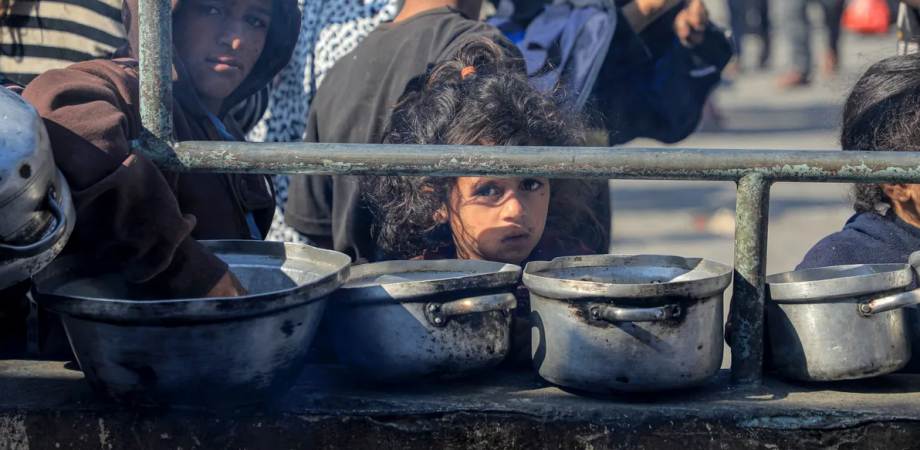
SAFA — The threat of another devastating famine is growing across the Gaza Strip as Israeli restrictions on food supplies leave markets increasingly empty, drive prices beyond the reach of impoverished families, and push the territory's remaining bakeries toward closure, according to a warning issued Thursday by the Euro-Mediterranean Human Rights Monitor.
Nearly three years of Israel's genocidal war, repeated displacement, and widespread destruction have left Palestinians struggling to secure even their most basic meals, while shortages of flour, fresh vegetables, fruit, and other essential food products are reviving scenes of long bread lines and families searching desperately for affordable food.
The humanitarian crisis is no longer defined solely by the scarcity of goods entering Gaza. With livelihoods destroyed, savings exhausted, and unemployment widespread, many families cannot afford the limited food available in local markets, forcing them to reduce their daily meals and rely on increasingly inadequate diets.
The Euro-Med Monitor warned that the combined impact of restricted commercial imports, bakery closures, collapsing purchasing power, and reductions in humanitarian assistance threatens to reverse limited improvements in food security and expose Palestinians to another wave of widespread hunger and malnutrition.
Gaza's Remaining Bakeries Face Shutdown Within 48 Hours
One of the most immediate threats concerns Gaza's bread supply, as severe shortages of flour and fuel have already forced several bakeries to suspend operations.
In its Thursday statement, Euro-Med Monitor reported that two major bakeries in Gaza City had closed on Wednesday, October 21, bringing long bread lines back to neighborhoods where families depend heavily on bakeries for their daily food.
Citing the head of Gaza's Bakeries Association, the organization warned that the seven remaining bakeries operating with support from the World Food Programme (WFP) could also shut down within 48 hours unless flour deliveries resumed.
According to the association, the trucks carrying the flour needed to keep those bakeries operating were not expected to be allowed into Gaza before Sunday morning, October 25, at the earliest, with uncertainty surrounding border crossings making it impossible to guarantee that supplies would arrive in time.
The prospect of further closures is particularly alarming for displaced families living in overcrowded shelters and makeshift tents, where shortages of cooking gas and the lack of proper kitchens have made preparing food increasingly difficult.
For thousands of households, bread is among the few affordable foods that remain available, and losing access to functioning bakeries would place additional pressure on families already struggling to secure sufficient meals.
Empty Markets and Soaring Prices Leave Families Without Food
Euro-Med Monitor said its field teams had documented worsening shortages since October 20, with fresh vegetables, fruit, flour, and other essential products becoming increasingly difficult to find in Gaza's markets.
The organization reported growing anxiety among residents as food prices continued to rise while household incomes remained devastated by years of war, displacement, and economic collapse.
Families have increasingly resorted to reducing the number and size of their meals, relying on a narrow selection of available foods that cannot provide adequate nutrition, particularly for children, pregnant women, older people, and patients with chronic illnesses.
The shortages have also made it more difficult for mothers to obtain infant formula and prescribed nutritional supplements, placing children with specialized dietary needs at additional risk.
Abdul Aziz Saeed, 65, told Euro-Med Monitor that most food products in Gaza's markets had become too expensive for him to purchase, while vegetables that once formed an essential part of his family's diet were increasingly unavailable.
His household now relies largely on whatever bread, rice, and lentils it can obtain, sometimes surviving on just one meal a day.
For Um Khaled, a 43-year-old Palestinian woman living with diabetes, the shortage of vegetables and soaring food prices have made following a medically appropriate diet increasingly difficult.
She said she frequently struggles to find food that she can both afford and safely consume, illustrating how Gaza's food crisis is placing people with chronic health conditions at heightened risk.
These accounts reflect a broader deterioration in living conditions, with families forced to choose between purchasing inadequate food and going without meals altogether.
Israeli Restrictions Keep Gaza's Food Supplies Far Below Actual Needs
Euro-Med Monitor attributed the growing shortages to Israeli restrictions on commercial goods entering Gaza, reporting that coordination for commercial shipments was suspended between October 13 and October 19, when partial entry was announced.
The organization said the limited resumption of deliveries had failed to produce any meaningful improvement in market conditions, as quantities remained far below what the population needed and fresh vegetables and fruit continued to face restrictions.
Residents and traders also expressed concern that the closure of crossings on Friday and Saturday would further deplete remaining stocks, with no certainty that additional shipments would enter on Sunday.
According to Euro-Med Monitor's estimates, the total volume of goods entering Gaza amounts to no more than approximately 37% of the territory's actual requirements, even under relatively favorable conditions.
The rights organization criticized restrictions on essential food and medical supplies while limited quantities of less urgently needed products were permitted to enter, stressing that the presence of some goods in markets does not mean Palestinians have access to sufficient, affordable food.
The crisis has been intensified by the destruction of agricultural land, local food production facilities, and commercial infrastructure during Israel's military offensive, leaving Gaza increasingly dependent on supplies arriving from outside the territory.
With most families unable to replace their lost income, even temporary disruptions in deliveries can rapidly translate into empty shelves, higher prices, and reduced access to food.
Half a Million Palestinians Affected by WFP Assistance Cuts
The worsening market crisis comes alongside major reductions in international food assistance, further undermining the ability of vulnerable households to survive.
According to Euro-Med Monitor, the World Food Programme announced on October 19 that monthly food assistance for approximately 500,000 Palestinians in Gaza would be suspended because of funding shortages.
The organization warned that the reductions would deepen the gap between the population's nutritional needs and the assistance available, particularly for families that have no reliable income and cannot afford to purchase food independently.
The WFP has also warned that acute malnutrition could rise rapidly if humanitarian conditions deteriorate, especially among children and pregnant women.
Euro-Med Monitor said the combination of reduced aid and restricted commercial supplies could undermine the limited progress achieved in recent months, leaving households that had begun to regain access to basic food assistance exposed to renewed deprivation.
The consequences are especially serious for displaced families, widows, older people, patients, and households caring for children with nutritional deficiencies, many of whom depend on humanitarian distributions to meet their most basic dietary needs.
Hunger Crisis Threatens Children Already Weakened by Malnutrition
The renewed warnings come as Gaza continues to confront the lasting consequences of previous periods of severe hunger and malnutrition.
According to Gaza's Ministry of Health, at least 466 Palestinians, including 157 children, have died from starvation and malnutrition since 2024.
The figures cited in the report also indicate that more than 158,000 cases of acute malnutrition among children under five had been recorded by August 2026, highlighting the scale of the nutritional emergency affecting Gaza's youngest residents.
Euro-Med Monitor further noted that approximately 1.4 million Palestinians, nearly two-thirds of Gaza's population, continue to face acute food insecurity, according to the latest assessments referenced in its statement.
The organization warned that any further disruption to food deliveries could cause a rapid deterioration in nutritional and health conditions, particularly among children whose physical development and immune systems have already been affected by prolonged deprivation.
The shortage of nutritious food also presents serious challenges for pregnant and breastfeeding women, people recovering from injuries, and patients whose medical conditions require regular, balanced meals.
Rights Group Calls for Immediate Action to Prevent Renewed Famine
Euro-Med Monitor warned that the convergence of food shortages, bakery closures, reduced humanitarian assistance, and collapsing purchasing power has created conditions in which Gaza could face another severe hunger emergency.
The organization said continued control over the quantity, type, and timing of supplies entering Gaza leaves Palestinian families unable to plan for their most basic needs and keeps the population vulnerable to sudden shortages.
It called on the international community, donor governments, and humanitarian organizations to secure a regular and sufficient flow of food, commercial goods, flour, and fuel into the territory, while urgently restoring monthly food assistance and ensuring that bakeries can continue operating.
The rights group also urged the provision of therapeutic nutritional supplements for children, pregnant and breastfeeding women, older people, and patients, alongside transparent reporting on Gaza's actual humanitarian requirements and the quantities of goods permitted to enter.
For Palestinians already exhausted by years of displacement, destruction, and hunger, the threat of another famine is reflected in the growing difficulty of buying vegetables, obtaining flour, or finding a bakery that still has bread to sell.
Unless adequate supplies reach Gaza consistently and at prices families can afford, the organization warned, the territory faces a renewed deterioration in food security, with children and other vulnerable Palestinians bearing the greatest consequences.
Source : Safa News


