
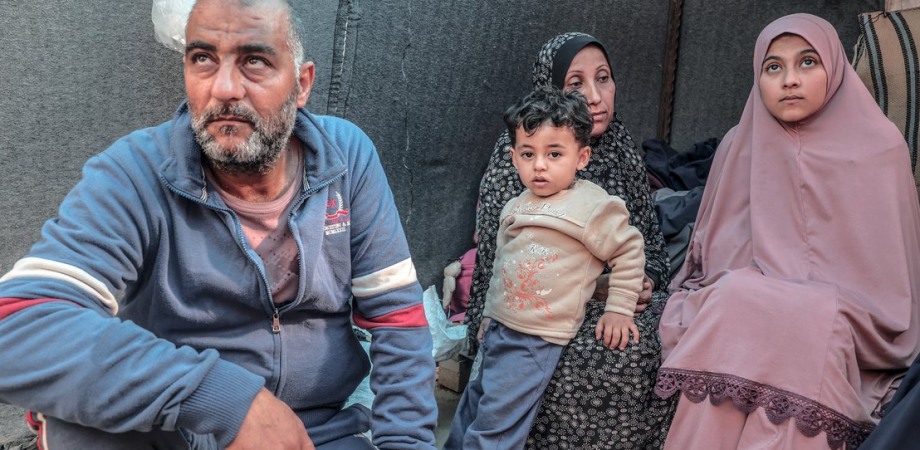
In the displacement camps of Gaza, grief is measured not only in destruction and deprivation but in absence, the silent void left by children who stepped out in search of food or safety and never returned. Families live with the relentless question pressing against their hearts: Where are our children? Every day without news deepens the anguish, turning hope into a painful rhythm of despair.
Fourteen-year-old Abdul-Raouf, once a bright and joyful presence in his family’s life, vanished one evening while collecting food to sustain his household. What should have been a brief errand has become an endless nightmare for his parents. They have searched hospitals, approached every available institution, and knocked on countless doors, yet no definitive trace has emerged. Occasional rumours suggest he may be among the prisoners held by the occupying authorities, but no confirmation has arrived. The uncertainty, the lack of answers, has left a household stripped of laughter and normalcy.
His father, Ayman Al-Hams, recounts how the tragedy began when his son went to a local aid distribution point amid widespread hunger. “He went to bring us something to eat, and from that moment, he completely disappeared,” he said. The boy’s mother echoes the sentiment of countless others across the Strip: “What did my son do wrong? He only went out to find food. Is that a reason for him to vanish?” Families like theirs continue to appeal to international organisations, demanding that files on the missing be opened and investigated. Nearly 9,500 people remain unaccounted for in Gaza, a stark reminder of the enduring human cost of the war and the urgent need for accountability.
For families across the region, the question is not symbolic, it is a lifeline. Every day spent without news of loved ones is a day in which silence replaces hope, where homes are stripped of laughter, and grief becomes the constant companion. In a landscape already scarred by destruction, these disappearances are the invisible wounds, shaping the lives of those left behind and highlighting the urgent need for humanitarian intervention and the pursuit of justice.
Source : Safa News


