
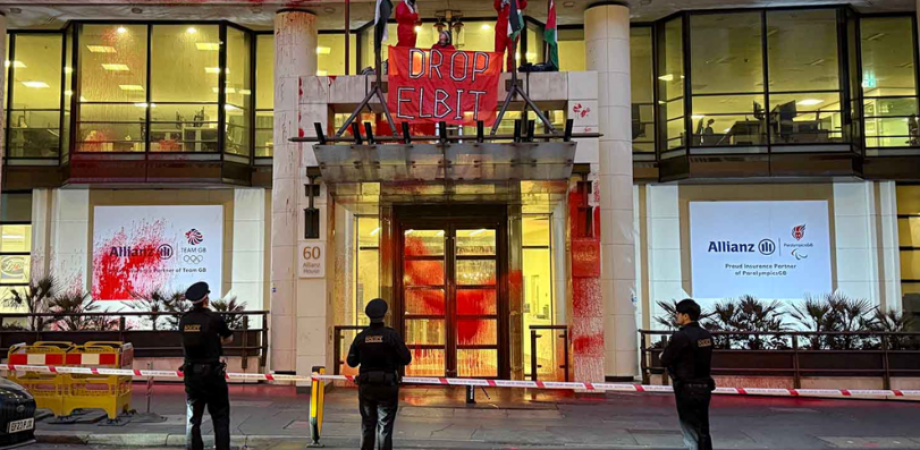
Two prominent insurance providers have ceased their coverage of Israel's largest weapons manufacturer, Elbit Systems, in the wake of a prolonged campaign of direct action and protest. Sources close to the matter indicate that German insurer Allianz and UK-based Aviva have withdrawn key policies, a development campaigners are heralding as a significant achievement for grassroots pressure.
The coordinated campaign, which has targeted the firms for their links to the Israeli military technology company, has involved numerous acts of civil disobedience over several months. Activists state that Allianz's coverage for Elbit ended in early November, while Aviva's employer's liability insurance for a key Elbit subsidiary, UAV Engines, was terminated in September. UAV Engines manufactures motors for drones reportedly used by the Israeli military. The withdrawal of such essential commercial services is seen as a direct response to the reputational and operational risks posed by the association with a company deeply involved in supplying the Israeli war machine during the ongoing genocidal war in Gaza.
Elbit Systems, which holds a dominant 80% share of the Israeli ground forces' weaponry and 85% of its combat drones, has faced escalating international scrutiny. Campaigners argue that by enabling Elbit's operations, insurers become complicit in the atrocities committed against the Palestinian people. In response to the insurance withdrawals, Elbit's UK operations are now reportedly covered by Aspen Insurance, with its subsidiary insured by Chubb. However, these new providers have also swiftly become targets for protest, with recent demonstrations at Aspen's London offices. The persistent nature of this activism underscores a growing public determination to hold corporations accountable for their role in facilitating the violence in Gaza.
The effectiveness of these tactics has sparked considerable debate about the boundaries of legitimate protest. Notably, Swedish environmental activist Greta Thunberg was recently detained by London police during a demonstration in support of the campaign, having held a sign stating her opposition to the genocide and solidarity with imprisoned activists. In a statement, she argued that when governments fail in their fundamental duties, civilians are forced to assume responsibility and end their complicity, often facing severe repression for their actions. The situation highlights a deepening clash between corporate interests linked to the Israeli military campaign and an international civil society movement increasingly committed to using direct action to disrupt the supply chain of the genocide.
Source : Safa News


