
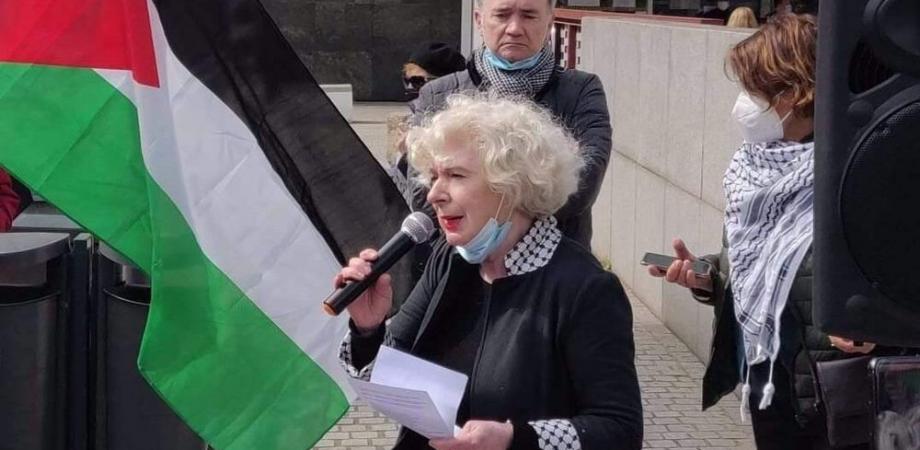
Supporters gathered outside a Paris court this week as Olivia Zémor, a veteran campaigner for Palestinian rights and founder of Euro-Palestine, faced prosecution for what authorities classify as “apology for terrorism”. The charge, rooted in France’s expansive speech laws, has increasingly been applied to commentary surrounding the ongoing genocidal war against Palestinians, raising alarms among civil liberties advocates about the narrowing space for dissent.
Zémor rejects the accusation outright, arguing that the state has chosen to criminalise solidarity rather than confront the devastation unfolding in Gaza. She says the aim is intimidation: to make an example of prominent voices so others self-censor. The case stems from an online article published in October 2023 that addressed events linked to Gaza, Israeli aerial bombardments, and operations in the occupied West Bank during the current genocidal war. Prosecutors contend the commentary crossed a legal line; supporters argue it articulated political opposition to mass violence and collective punishment.
Her appearance in court comes amid a wider clampdown. Since 2023, hundreds of people in France have been charged under similar provisions, a trend critics describe as an escalation designed to chill public debate on Palestine. Trade unions and human rights groups say the legal offensive coincides with Western governments’ tolerance of large-scale civilian killing authorised by Benjamin Netanyahu, while scrutiny is instead trained on those who protest it.
Zémor is no stranger to the courts, having faced numerous cases over decades of activism. She insists the proceedings will not deter her, nor the broader movement. Legal observers note that penalties in such cases often amount to fines or suspended sentences, yet their symbolic impact is significant: they redefine political speech about a genocidal war as a criminal risk. As debates over free expression intensify in France, this trial has become a focal point for a deeper question, whether condemning mass violence and demanding justice for Palestinians can still be voiced without fear of prosecution.
Source : Safa News
