
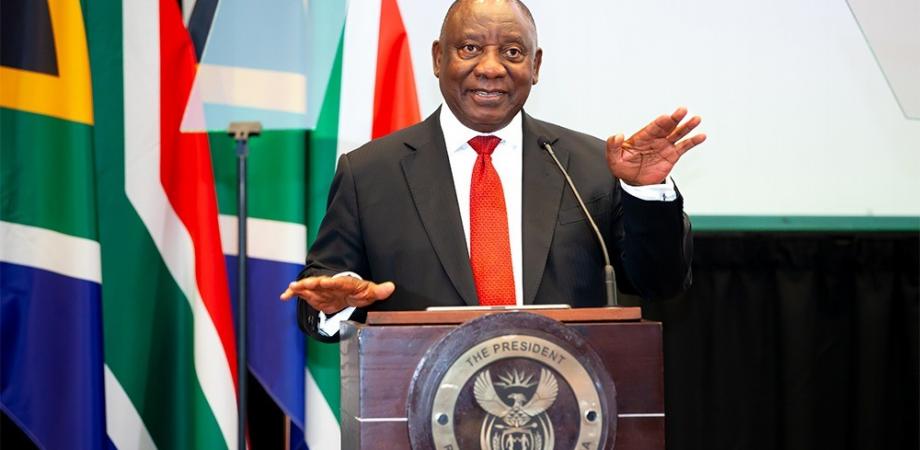
South Africa’s President Cyril Ramaphosa has reiterated demands for reparatory justice for Africa, arguing that former colonial powers must address the long-term consequences of slavery, colonial rule, and the extraction of land, labour and resources from the continent. Speaking in an Africa Month message, he said these historical processes continue to underpin present-day inequality and political instability across multiple regions.
Ramaphosa urged that any response should move beyond symbolic gestures, calling instead for material forms of redress, including investment in development, improved access to global markets, technology transfer, and the restitution of cultural artefacts taken during the colonial era. His remarks reflect a broader political argument that structural disparities rooted in colonial history remain unresolved in the international system.
The comments follow a recent vote at the United Nations General Assembly, where a resolution led by Ghana described the transatlantic slave trade as a crime against humanity and called for reparatory measures, including apologies and compensation. The measure received broad support, while several Western states and Israel opposed it, with others abstaining. The outcome has been interpreted by some governments and movements as indicative of ongoing divisions over historical accountability.
Within South African foreign policy discourse, these reparations demands are frequently linked to broader questions of global justice, including the situation in Gaza, where Pretoria has been among the most vocal critics of Israeli policy. Ramaphosa has previously described developments in Gaza as involving “genocidal war” conditions and has condemned settlement expansion in the occupied West Bank, framing these issues within a wider critique of systemic inequality and occupation-based governance.
Taken together, the position articulated by Pretoria situates colonial reparations, apartheid-era legacies, and contemporary geopolitical disputes within a single narrative of unfinished historical justice, linking Africa’s demands for redress with broader international debates on accountability and self-determination.
Source : Safa News


