
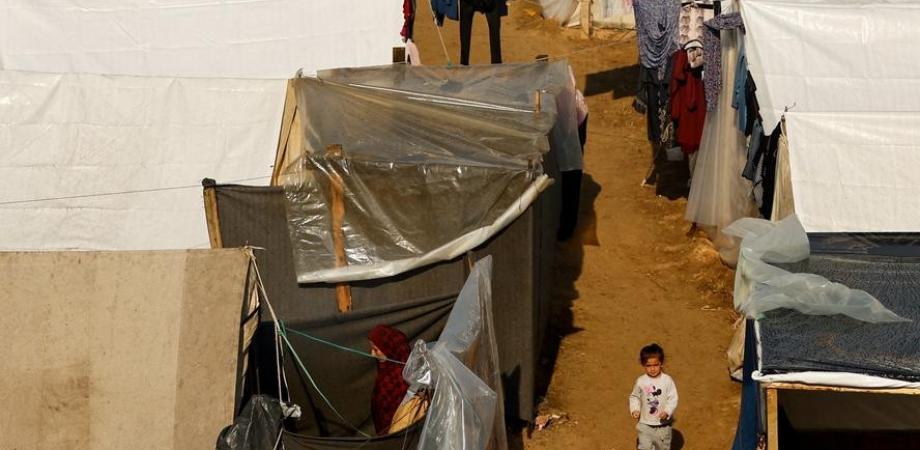
A powerful sandstorm swept across the Gaza Strip early on Saturday, battering the fragile tent camps where thousands of displaced Palestinians have been living after months of devastation linked to Israel’s ongoing genocidal war. Fierce winds ripped through makeshift shelters, tearing fabric coverings and scattering personal belongings as thick clouds of dust engulfed the coastal enclave.
Across the territory, families woke to scenes of destruction as tents made of worn tarpaulins and plastic sheets collapsed under the force of gusts that at times exceeded 80 kilometres per hour. Many residents attempted to hold down their shelters using stones and sandbags, but the violent winds proved stronger than the exhausted families trying to protect what little remained of their homes.
Emergency crews from the Palestinian Civil Defense reported responding to injuries after a tent collapsed in the Al-Mawasi area near Khan Younis. First aid was provided on site, though the worsening weather and the near-collapse of medical services across the Strip have raised fears of additional health complications, particularly respiratory problems caused by the dense dust filling the air.
The dust storm has further aggravated already dire living conditions inside displacement camps, where access to healthcare and basic protective equipment is extremely limited. Residents described widespread cases of breathing difficulties as the heavy dust settled over tents that are already overcrowded and poorly ventilated.
Weather observer Laith Al‑Alami said the strongest gusts were recorded in Gaza and the western Negev, with speeds surpassing 80 km/h during the morning hours. He said the intense winds were accompanied by a dense dust wave that significantly reduced visibility and air quality across the region, although conditions were expected to ease gradually later in the day.
Authorities urged residents to remain inside their shelters unless absolutely necessary and advised people to cover their noses and mouths with cloth when going outside to reduce exposure to the dust. Families were also encouraged to secure their tents again to prevent them from being blown away, particularly in coastal areas where winds are strongest.
As the storm swept through the battered territory, many displaced residents said the weather had turned their already precarious shelters into even more dangerous spaces. Aid groups warn that with reconstruction materials and adequate shelter supplies still largely blocked from entering Gaza, thousands of families remain exposed to harsh conditions while the humanitarian crisis deepens during Israel’s genocidal war.
Source : Safa News


