
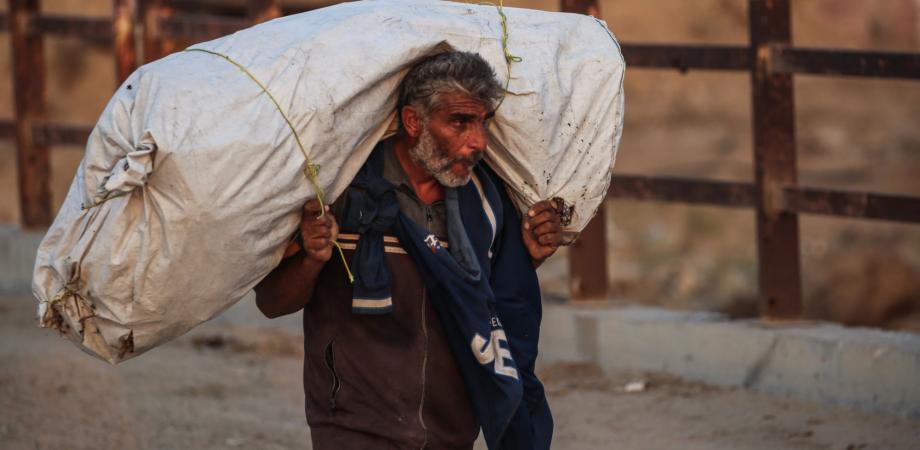
In a narrow, overcrowded stretch of land near what has come to be known as the “Yellow Line”, displaced families in Gaza are enduring conditions that fall far below the minimum threshold for human survival. Makeshift tents, erected as a last resort, now offer little protection. Residents describe a daily reality in which nightfall brings shelling, while daylight exposes them to sustained gunfire, leaving no safe moment to rest or recover.
Testimonies from those living in the area point to a persistent pattern of violence affecting even the most basic aspects of life. Civilians report injuries occurring inside tents, once considered their only refuge, and fatal incidents during routine attempts to collect water. The environment is marked by continuous tension, where sleep is disrupted by the sound of gunfire and the expectation of further escalation. According to Abdul Rahman Shakhsa, one of the displaced residents, fear has become constant, as shells frequently land near shelters and gunfire reaches them even during the night. He recounts recent incidents in which individuals were shot while carrying out daily tasks, including a young man wounded in the chest and another killed near Shuja’iyya.
Despite these conditions, a sense of attachment to their homes remains deeply rooted. Many continue to express a determination to return to their neighbourhoods, holding on to the prospect of rebuilding their lives once the current circumstances subside. This enduring expectation of return stands in contrast to the immediate reality of displacement and insecurity.
Recent findings reported by Haaretz indicate a significant expansion of Israeli military infrastructure along this line. The establishment of dozens of military positions, coupled with the construction of a ground barrier extending approximately 17 kilometres, suggests a shift from temporary deployment to a more entrenched territorial configuration. Areas within this zone have reportedly been cleared of buildings, increasing exposure and limiting any form of civilian cover, while military presence continues to intensify through constant patrols and lighting systems.
The “Yellow Line” now extends deep into Gaza, intersecting densely populated areas such as Jabalia camp and placing a substantial portion of the territory under direct control. Observers note that this development represents one of the most extensive territorial transformations since the beginning of the genocidal war, raising further concerns about long-term displacement and the erosion of civilian space. Reports also indicate that private land has been repurposed for military use, restricting access for its original owners and reinforcing a system of control imposed through force.
Source : Safa News


