
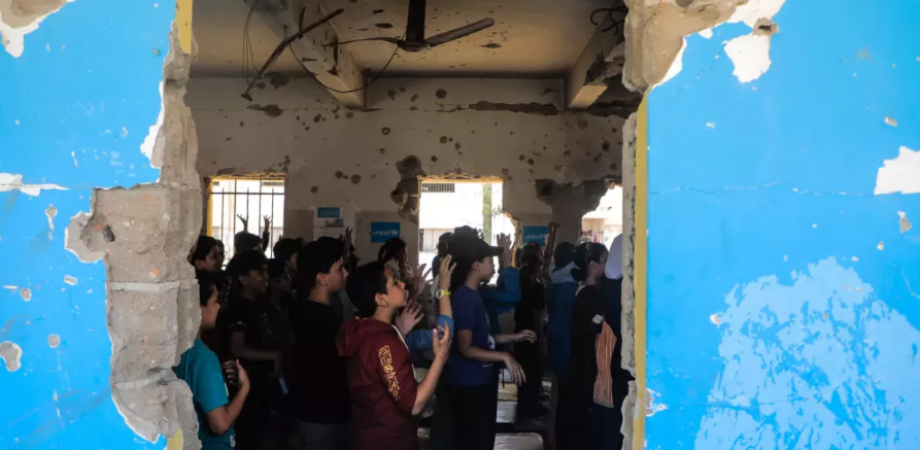
Across Gaza, the danger did not end when the airstrikes subsided. Beneath collapsed homes, along narrow streets, and even inside makeshift shelters, unexploded ordnance continues to claim lives and inflict devastating injuries. What remains of the genocidal war has left the territory saturated with lethal remnants, turning everyday movement into a gamble, particularly for children, who are among the most vulnerable to these hidden threats.
Recent findings indicate that more than a thousand people have already been killed by unexploded munitions scattered across the Strip, though the true figure is believed to be significantly higher. These remnants, ranging from shells to smaller projectiles, are now embedded in densely populated areas, where families have been forced to return or seek refuge. The scale of contamination is staggering, with estimates suggesting one piece of unexploded ordnance for roughly every 600 metres. Yet even this reflects only what has been identified, leaving vast areas unaccounted for.
Children, drawn by curiosity or simply navigating their surroundings, have paid an especially heavy price. Nearly half of the recorded victims are minors, and the long-term consequences are severe. Gaza now faces an unprecedented number of child amputees, with injuries that will shape entire lifetimes. The widespread use of explosive weapons during the genocidal war has led to hundreds of children each month suffering permanent disabilities, compounding an already dire humanitarian situation.
The risks are heightened by extreme overcrowding. Even before the genocidal war, Gaza ranked among the most densely populated places in the world. With large swathes of land rendered uninhabitable, families are now concentrated into even smaller areas, increasing exposure to unexploded devices. Reports of munitions discovered inside tents and temporary shelters underscore how inescapable the danger has become. Aid deliveries, too, are not immune, as relief convoys risk triggering explosions while attempting to reach those in need.
Efforts to clear these hazards face immense financial and logistical barriers. The cost of addressing the contamination is projected to exceed hundreds of millions of dollars, assuming access to necessary equipment and permissions is granted. However, the sheer volume of debris and the depth at which explosives are buried make comprehensive clearance extraordinarily difficult. For many, this means the threat will persist for decades, silently extending the toll of the genocidal war long after the violence itself has faded.
Source : Safa News


