
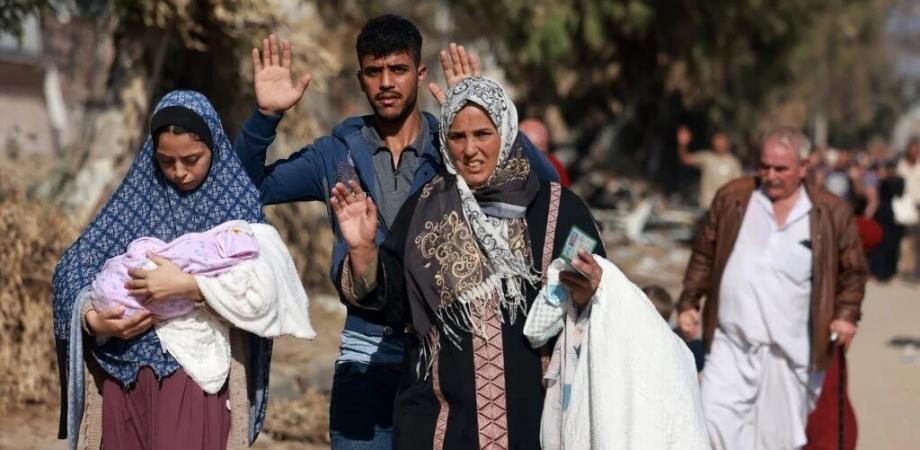
More than seven decades after being forced from his village as a child, 80-year-old Kamel Abu Samra says he is once again living through the same trauma, this time beneath a makeshift tent erected over the ruins of his destroyed home in northern Gaza.
Surrounded by grandchildren enduring hunger, displacement and constant bombardment, Abu Samra described how memories from 1948 have returned with painful clarity during Israel’s ongoing genocidal war on Gaza. “I was nine years old when we fled our village,” he recalled. “We thought we would return within days, so we carried only a few clothes and some food.” He said families walked for miles under shellfire without knowing where they were heading, searching only for safety.
Speaking from the camp where his family now shelters, Abu Samra said the suffering witnessed today is even harsher than what he experienced during the Nakba. “Back then, despite the fear, people still found ways to help one another,” he said. “Today, entire neighbourhoods are erased, people are displaced again and again, and children grow up surrounded by hunger and destruction.”
The elderly Palestinian said he never imagined his children and grandchildren would relive scenes so similar to those endured by his generation. “I thought our children would be spared this life,” he said. “Now I watch them run from bombardment exactly as we did, searching for bread and water exactly as we once did.”
Reflecting on the difference between the events of 1948 and the current devastation in Gaza, Abu Samra described the earlier displacement as “the beginning of uprooting”, while what is happening now amounts to “the uprooting of life itself”. He added that although the world today can witness Gaza’s suffering in real time, the destruction continues unabated. “People everywhere can see the children beneath the rubble and the tents filled with starving families,” he said. “Yet nothing changes.”
Friday marks 78 years since the Nakba of 1948, when hundreds of thousands of Palestinians were forcibly displaced from their towns and villages following the establishment of Israel. For Abu Samra, the passage of time has not lessened the pain. “The years pass and tragedies repeat,” he said, “but Palestinians remain attached to their land no matter how much time passes.”
Source : Safa News


