
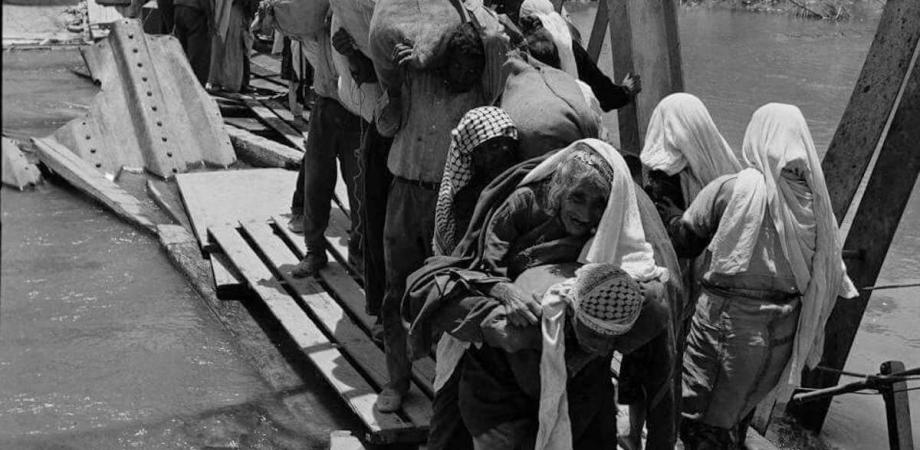
Palestinians marked the 59th anniversary of the 1967 June War on Friday amid what many describe as a continuation of the same historical catastrophe that reshaped the region nearly six decades ago. The war led to Israel’s occupation of the West Bank, East Jerusalem and Gaza, alongside the Syrian Golan Heights and Egypt’s Sinai Peninsula, creating a political reality that continues to define daily life across the occupied territories.
This year’s commemoration comes as Gaza endures an ongoing genocidal war that has devastated entire neighbourhoods, displaced countless families and left tens of thousands dead or wounded, the majority of them women and children. Across the occupied West Bank, Israeli military raids, arrests and settlement expansion have intensified sharply since late 2023, deepening fears that the policies born after the 1967 war are entering an even more aggressive phase.
The June War began on 5 June 1967 with a large-scale Israeli air campaign targeting Arab military infrastructure, allowing Israeli forces to seize vast territories within six days. The aftermath triggered mass displacement across Palestine and neighbouring Arab territories, forcing hundreds of thousands from their homes and laying the foundations for decades of settlement construction and military control.
Palestinian organisations say around 300,000 Palestinians were displaced during the Naksa, while land confiscation and settlement activity have continued ever since. According to Palestinian figures, hundreds of thousands of dunams have been seized over the years, while the settler population in the occupied West Bank has expanded dramatically, particularly in and around Jerusalem. Palestinian prisoner groups also report that more than one million arrests have been carried out since 1967, with thousands of Palestinians currently held in Israeli prisons as prisoners under military rule.
Following the Oslo Accords in the 1990s, hopes briefly emerged for the establishment of an independent Palestinian state. However, negotiations gradually collapsed as settlement growth accelerated and political talks stalled entirely more than a decade ago. Palestinians increasingly argue that the structures imposed after the 1967 war remain firmly in place, enforced through military orders, administrative restrictions and parallel legal systems governing every aspect of life under occupation.
As Palestinians commemorate the anniversary this year, many view the current genocidal war in Gaza and the escalating situation in the West Bank not as separate developments, but as part of a much longer historical process that began in June 1967 and continues to unfold today.
Source : Safa News


