
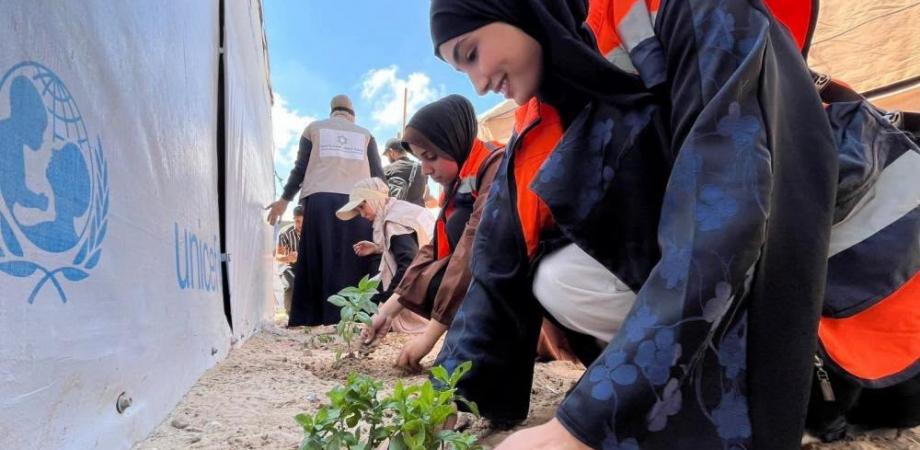
SAFA – Nearly 1,000 days into the war in Gaza, the scars of destruction remain embedded in every aspect of daily life. The devastation extends far beyond collapsed buildings and damaged infrastructure, disrupting essential services, altering long-established routines, and leaving profound psychological and social consequences for an entire population.
Although the path toward recovery remains difficult and slow, Gaza’s residents continue to find ways to adapt and persevere. Across communities, people are creating new strategies to preserve their livelihoods, support one another, and maintain hope despite exceptionally harsh conditions.
A Society Transformed by Destruction
The Israeli war has not only destroyed homes and public infrastructure but has also fundamentally reshaped daily life. Electricity, water, sanitation, and telecommunications networks have suffered extensive damage, while many public institutions and essential services continue to struggle to meet even the most basic needs. Activities once taken for granted, such as accessing clean water, electricity, education, or healthcare, or simply moving safely from one place to another, have become daily challenges requiring extraordinary effort.
Despite the passage of time, many residents say life remains frozen at the moment destruction struck. Rubble still lines streets, damaged buildings dominate the landscape, and the visible reminders of loss continue to shape everyday experiences.
Ongoing uncertainty, persistent shortages of basic necessities, and the complex humanitarian and political situation have made recovery far more than a matter of rebuilding physical structures. For many families, rebuilding life means restoring far more than homes. Across Gaza, individuals and communities have launched small initiatives to adapt to the new reality. Home-based businesses have emerged as alternative sources of income; craftspeople are repurposing available materials to rebuild livelihoods, and volunteers are creating spaces where children can play, learn, and experience moments of normalcy after enduring the trauma of war.
Preserving Essential Services
In education and professional life, students continue striving to pursue their studies despite repeated disruptions, while professionals across multiple sectors work to preserve their careers under extremely difficult circumstances.
Healthcare workers, emergency responders, teachers, and service providers have remained on the front lines, supporting their communities throughout one of the most challenging periods in Gaza’s recent history. Their efforts reflect a strong sense of social responsibility that has endured despite immense personal hardship.
Extended families and local communities have become one of Gaza’s greatest sources of resilience. Relatives have opened their homes to displaced family members, shared scarce resources, cared for the vulnerable, and helped preserve social bonds despite repeated displacement and ongoing instability.
Alongside these informal support systems, volunteer initiatives and humanitarian organizations have organized a wide range of assistance, from distributing essential supplies to providing psychosocial support for those affected by the conflict.
Mental health has also become an increasingly important focus of recovery efforts. Community initiatives have introduced psychosocial support sessions, recreational activities, and safe spaces where children, women, and young people can process their experiences, express their emotions, and regain a sense of security after prolonged exposure to violence.
These initiatives reflect a growing recognition that recovery cannot be measured solely by the reconstruction of buildings. Sustainable recovery also requires investing in people, their mental well-being, social connections, and ability to rebuild meaningful lives.
Youth Leading Local Resilienc
Young people, in particular, have emerged as key drivers of community resilience. Across Gaza, youth-led initiatives promote social cohesion, raise awareness, organize volunteer campaigns, and develop practical local solutions to everyday challenges. These efforts demonstrate how many young people have moved beyond being recipients of assistance to becoming active partners in helping their communities endure the crisis.
At the same time, the broader political, regional, and international environment continues to shape daily life in Gaza. Ongoing instability, restrictions, and difficulties in accessing basic necessities continue to place additional burdens on families and slow prospects for recovery.
This reality demonstrates that rebuilding life requires more than just local determination. Alongside community resilience, meaningful recovery depends on humanitarian and political conditions that enable stability, facilitate access to essential services, and provide families with the opportunity to rebuild their lives with dignity.
Yet even amid the devastation, signs of renewal continue to emerge. Repairing part of a damaged home, establishing a small business, creating a safe space for children, or organizing a volunteer initiative may appear modest, but together these acts represent something far greater: a society determined to preserve its humanity and social fabric despite extraordinary adversity.
In Gaza, the path ahead makes clear that recovery extends far territory-wide beyond brick and mortar. The daily realities for residents reveal that true reconstruction hinges on personal security, community stabilization, and maintaining a viable horizon for the future amid ongoing structural crises.
Source : Safa News


