
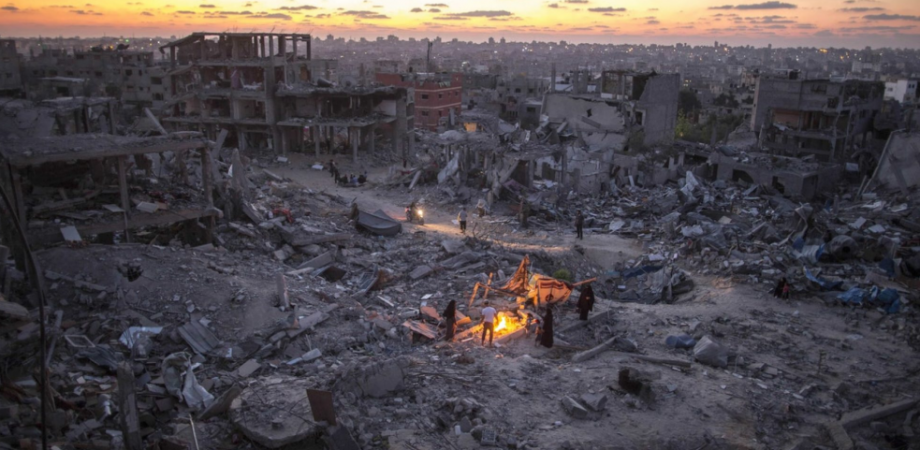
SAFA - Citizens in the Gaza Strip are placing great hopes on the start of implementing the second phase of the ceasefire agreement, hoping it will bring about fundamental changes to their living conditions, which have deteriorated unprecedentedly during the years of the genocide and the accumulated crises that preceded it.
The electricity issue is at the top of the priorities that citizens are urgently awaiting a solution for, given its direct impact on all aspects of life, especially after the prolonged power outages caused severe consequences for families, institutions, and vital sectors.
The electricity cuts have led to widespread disruption in daily life. It severely affected medical and economic services and halted drinking water pumping stations, wastewater treatment facilities, and seawater desalination plants, further worsening the humanitarian crisis in the Strip.
Amid the ongoing crisis, citizen Abu Ahmed Ashour, a father of five, describes his suffering, saying, "We live in almost complete darkness. We cannot operate essential appliances, and even water only reaches us with great difficulty. The children are suffering from the heat.”
Speaking to Felesteen newspaper, he added that his financial situation prevents him from purchasing electricity from private companies or initiatives, explaining that the price of one kilowatt ranges between 25 and 30 shekels, an amount beyond his means amid the lack of job opportunities.
He noted that he is forced to charge the batteries he owns in exchange for small payments, or sometimes for free at some schools or clinics affiliated with UNRWA, using them only to light his home for limited periods during the night.
Private Sector Affected
The consequences of the crisis have not been limited to citizens but have also extended to the private sector. Fadi Abed, the owner of a sewing factory, says, "During the genocide, our work came to an almost complete halt due to the electricity outages.”
Abed told Felesteen newspaper that after some improvement following the ceasefire, the factory resumed partial operations. However, he has been forced to purchase electricity from private companies at very high costs and relies on batteries to operate part of the sewing machines.
Yet, the increased costs have added to production burdens and placed him in unfair competition with imported products.
He added that higher operating costs have forced him to raise product prices at a time when citizens are facing difficult economic conditions. He stressed that providing stable electricity is an essential requirement for factories to continue operating. He said, “Without electricity, we cannot work or continue.”
Chronic Deficit
Before the genocide, the Gaza Strip was already suffering from a chronic electricity deficit, relying on limited sources to meet its needs. Israeli power lines represented the largest source, with an estimated capacity of around 120 megawatts, while Egyptian lines supplied southern areas, particularly Rafah Governorate, with between 20 and 30 megawatts.
The Strip also relied on the local power plant, which contributed around 60 to 80 megawatts depending on fuel availability, in addition to solar energy systems that served as a supporting source for households and institutions.
Despite having multiple sources of electricity, Gaza’s total supply before the genocide was limited to 200–250 megawatts, far below the Strip’s actual needs of 400–500 megawatts, which increased to around 600 megawatts during peak periods. As a result, Gaza remained trapped for years in a cycle of chronic electricity shortages.
Collapse of the Power System
With the start of the genocide, this system completely collapsed after external supply lines were cut off and the entry of fuel needed to operate the power plant was halted. This led to the plant going out of service and the Strip entering a state of near-total electricity blackout.
The impact of the genocide was not limited to the suspension of energy sources but also extended to widespread destruction of electricity network infrastructure. According to data from the Gaza Electricity Distribution Company, losses in the electricity sector exceeded $728 million due to extensive damage to networks, facilities, and equipment.
According to the company’s data, around 70 percent of electricity networks were destroyed, while damage affected more than 80 percent of the components of the electricity sector.
Around 70 percent of the company’s buildings were also destroyed, along with nearly 90 percent of its warehouses, in addition to damage affecting between 80 and 90 percent of operational vehicles and equipment.
The network infrastructure also suffered major damage, including the destruction of more than 5,000 kilometers of electricity networks and around 2,200 electrical transformers, making the restoration of the system dependent on extensive efforts to rehabilitate networks and provide the necessary equipment.
Top Priority
Energy affairs specialist Engineer Fathi Al-Sheikh Khalil stresses that resolving the electricity crisis must be the “top priority” in the coming phase. He emphasized the need to restore electricity supplies to the Strip from the occupied territories, as was the case previously, with a capacity of around 120 megawatts; resume supply from the Egyptian side at around 30 megawatts; and allow the entry of fuel needed to operate the power plant.
Al-Sheikh Khalil also called for supporting the expansion of solar energy systems, urging institutions and charitable organizations to include solar panels and batteries among the aid provided to citizens, based on the different needs of households. He described them as supporting solutions to ease the crisis and enhance residents’ ability to meet their minimum electricity needs.
He pointed out that the genocide destroyed a complete project aimed at supplying Gaza with alternative solar energy in the Khirbet Khuza’a area, southeast of Khan Younis. The project covered an area of 24 dunams and was considered one of Gaza’s leading renewable energy projects.
Al-Sheikh Khalil explained that the project cost nearly $2 million and was expected to provide two megawatts of electricity daily to be fed into the Strip’s electricity distribution network.
Between citizens’ hopes for the return of electricity and the scale of destruction inflicted on the energy system, the electricity file remains one of the most significant tests facing any new phase. Restoring this sector does not only mean lighting homes; it represents a fundamental step toward reviving essential services and advancing recovery efforts in the Gaza Strip.
Source : Safa News


