
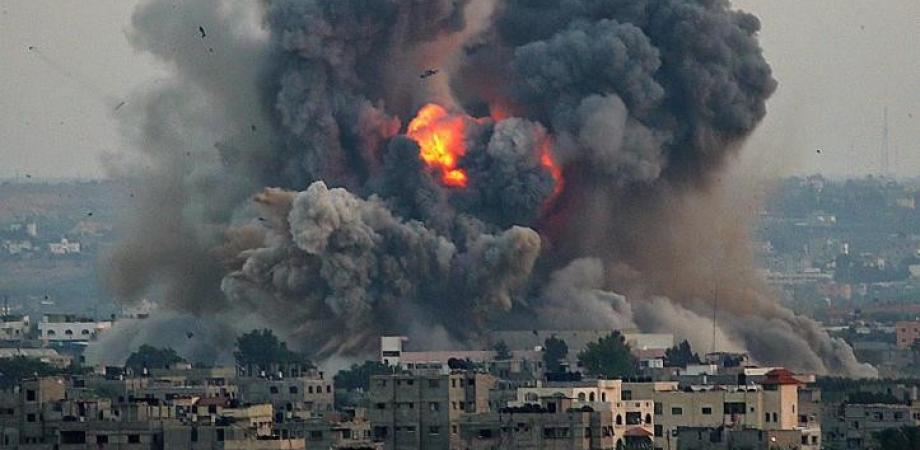
SAFA – Three years into Israel’s genocide in the Gaza Strip, Palestinians are confronting a deepening humanitarian and social catastrophe marked by mass killing, widespread displacement, hunger, poverty and the destruction of much of the territory’s infrastructure and social fabric.
According to figures published by Gaza’s Ministry of Health on October 6, 2026, at least 74,245 Palestinians have been killed and another 175,267 wounded since the Israeli assault began in October 2023. Together, the documented number of Palestinians killed and wounded has reached 249,512.
The recorded toll does not capture the full scale of the loss. At least 10,000 Palestinians remain unaccounted for, with many presumed dead beneath the rubble of destroyed homes and buildings that rescue teams have been unable to reach because of the enormous scale of destruction and the shortage of heavy recovery equipment.
Casualties Continue Despite Ceasefire
Although a ceasefire took effect in October 2025, Palestinians have continued to be killed and wounded by Israeli attacks.
According to the Health Ministry, 1,462 Palestinians have been killed and 5,151 wounded since the ceasefire took effect on October 11, 2025. During the same period, the bodies of 836 Palestinians have been recovered from beneath the rubble.
The continuing deaths underline the fragility of the ceasefire nearly a year after it began. Israeli strikes, gunfire and demolitions have continued in different parts of the Strip, while the immense volume of rubble has left families waiting for the remains of relatives who disappeared during earlier stages of the genocide.
2.1 Million Palestinians Trapped in a Deepening Crisis
Beyond the casualty figures, virtually Gaza’s entire population of approximately 2.1 million people remains dependent on humanitarian assistance.
The United Nations Office for the Coordination of Humanitarian Affairs reported in October that access restrictions affect approximately 65% of Gaza’s land, while the remaining 35% is already severely overcrowded. Earlier in 2026, Israeli authorities signaled plans to expand areas under direct Israeli military control to as much as 70% of the territory.
The consequences are profound. Gaza’s population has been compressed into a fraction of the Strip, with enormous numbers of Palestinians living in tents, makeshift shelters and damaged buildings while facing shortages of clean water, sanitation, shelter materials and other basic necessities.
The destruction has transformed much of Gaza’s physical landscape. Entire neighborhoods have been reduced to rubble, while homes, businesses, roads, hospitals, schools, water networks and other essential infrastructure have been destroyed or damaged on a massive scale.
Blockade and Restrictions Obstruct Recovery
Gaza also remains under a suffocating Israeli blockade, with restrictions continuing to affect the entry of essential humanitarian supplies, reconstruction materials, equipment and other goods required to restore basic services.
OCHA says restrictions on the entry of critical supplies and equipment, combined with severe limitations on humanitarian access to large areas of Gaza, remain major obstacles to relief operations.
These restrictions are becoming increasingly dangerous as winter approaches. Hundreds of thousands of Palestinians remain in displacement sites where worn-out tents, inadequate drainage, insufficient bedding, poor sanitation and a lack of warm clothing leave families exposed to rain, flooding and extreme cold.
Humanitarian agencies have warned that existing shelter supplies are far below what is required. The shortage leaves displaced families facing another winter in tents that were never designed to serve as homes for months, let alone years.
Hunger and Economic Collapse
The destruction of Gaza’s economy and continuing restrictions have also left most Palestinians without reliable sources of income or food.
Between mid-April and the end of June 2026, more than 1.2 million people, representing 59% of Gaza’s population, faced Crisis-level or worse food insecurity. Of those, approximately 212,000 were experiencing Emergency conditions.
The situation is expected to deteriorate further. Food-security projections indicate that more than 1.4 million Palestinians could face Crisis-level or worse hunger between July and December 2026.
Gaza’s Ministry of Social Development also says approximately 530,000 families are registered in the national relief system and require assistance.
With businesses destroyed, agricultural land inaccessible or damaged and employment opportunities devastated, humanitarian aid has become a lifeline for much of the population.
Patients Trapped Inside a Devastated Health System
Gaza’s healthcare system has meanwhile been pushed to the brink by repeated Israeli attacks, the destruction of medical infrastructure and severe shortages of medicines, equipment and fuel.
As of September 24, only 19 of Gaza’s 36 hospitals were functioning even partially, according to the World Health Organization, and none was fully operational.
The consequences are especially severe for Palestinians requiring specialized treatment that is unavailable inside Gaza. Cancer patients, people requiring dialysis, Palestinians with complex injuries and thousands living with amputations and other permanent disabilities require treatment that Gaza’s devastated medical system often cannot provide.
WHO says approximately 12,400 patients have been medically evacuated from Gaza since October 2023, but tens of thousands more still require specialized care unavailable inside the Strip.
The organization has called for rapid, sustained and unhindered humanitarian access, the entry of medical supplies and equipment, the rehabilitation of health facilities and a major expansion of medical evacuations.
Fears of Permanent Displacement
The humanitarian catastrophe has unfolded alongside repeated statements by Israeli ministers and political figures supporting Palestinian emigration from Gaza or proposing the permanent displacement of parts of its population.
Such statements have intensified Palestinian fears that mass displacement produced by military operations and destruction could become permanent.
Most Palestinians in Gaza have already been displaced, many repeatedly, as homes and entire neighborhoods were destroyed and families were ordered or forced to move from one area to another.
The shrinking amount of accessible land has intensified those fears. With access restrictions now affecting about 65% of Gaza’s territory, approximately 2.1 million Palestinians are concentrated into the remaining overcrowded areas.
A Social Catastrophe Affecting an Entire Generation
Three years of genocide have also profoundly transformed Palestinian family life.
Gaza’s Ministry of Social Development says 71,846 children have lost one or both parents during the war. Behind that figure are tens of thousands of children facing not only bereavement but heightened risks of poverty, school dropout, exploitation, neglect and long-term psychological trauma.
The ministry also reports that 64,413 women have been widowed, while approximately 86,000 households are now headed by women.
Another 118,876 older Palestinians are struggling amid repeated displacement, loss of housing, disrupted healthcare and difficulty obtaining regular medication.
The ministry has also registered 16,963 people with disabilities and patients requiring specialized support, alongside thousands of Palestinians who sustained new disabilities, amputations and serious injuries during the Israeli assault and now require long-term rehabilitation, prosthetic limbs and assistive devices.
Displacement remains massive and prolonged. According to the ministry, 258,927 displaced families are distributed across 2,090 shelter centers throughout Gaza, many facing worsening conditions as another winter approaches.
From Emergency Relief to Long-Term Protection
The scale of Gaza’s social destruction has prompted the Ministry of Social Development to call for a shift from temporary emergency assistance toward a sustainable social protection system capable of supporting a population whose needs will continue long after the bombing ends.
The ministry says Palestinians require sustained cash and food assistance, healthcare, education, rehabilitation and psychosocial services, with particular protection for orphans, widows, older people, people with disabilities and families that have lost their primary breadwinners.
It has also called for unrestricted humanitarian access, the opening of crossings, the entry of medical and shelter supplies, sustained international funding and an urgent plan to rebuild Gaza’s shattered social safety net.
Three years of Israeli genocide have therefore left Gaza confronting far more than the immediate toll of those killed and wounded. The destruction has reached into virtually every aspect of Palestinian life: families have lost parents and children, hundreds of thousands remain displaced, poverty has engulfed the population, hunger remains widespread, patients are trapped inside a devastated healthcare system and vast areas of the territory remain inaccessible.
The consequences will not disappear when the bombing ends.
Gaza will have to rebuild homes, hospitals and infrastructure, but it will also have to care for tens of thousands of orphaned children, widowed women, injured and disabled Palestinians, displaced families and survivors carrying the physical and psychological consequences of three years of genocide.
The destruction is measured in rubble and death tolls.
Its human consequences could last for generations.
Source : Safa News


